
TL;DR
Key Takeaways
- Office chair seat depth is the usable distance from the backrest contact point to the front edge of the seat pan.
- Proper office chair seat depth should support most of the thighs without pressing into the backs of the knees.
- A useful starting point is about three fingers to a small fist of knee clearance, or roughly 5 cm (2 in). Pressure-free support matters more than one exact measurement.
- A seat that is too deep may press behind the knees or make it harder to sit fully against the backrest. This can lead to sliding forward or perching on the front of the chair.
- A seat that is too shallow may leave too much of the thighs unsupported. This can reduce thigh support and lead to repeated shifting.
- Seat depth should be checked while sitting fully against the backrest with both feet supported on the floor or a stable footrest.
- Thigh length matters more than standing height when checking seat depth. Two people of the same height may need different seat depths.
- Persistent numbness, spreading symptoms, weakness, leg swelling, or other warning signs should not be assumed to come from chair depth alone.
Quick Answer
How deep should an office chair seat be?
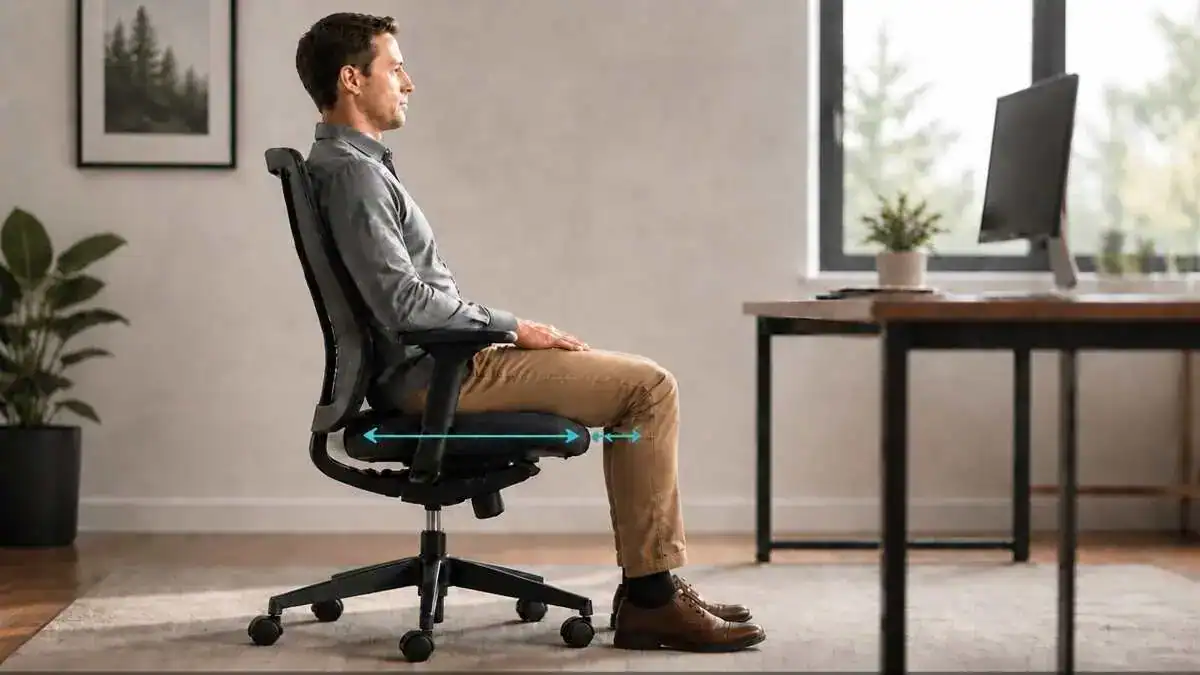
The right office chair seat depth should support most of the thighs while leaving comfortable space between the front edge of the seat and the backs of the knees. About three fingers to a small fist of clearance, or roughly 5 cm (2 in), is a useful starting point, not an exact rule.
There is no single ideal seat depth in inches for every person. A proper fit depends on thigh length, comfortable knee clearance, supported feet, and the ability to sit fully against the backrest. Standing height alone does not determine the right seat depth.
Table of Contents
When to Worry
Most mild chair-fit discomfort can be checked with simple ergonomic adjustments. However, some symptoms should not be assumed to come from office chair seat depth alone.
When Symptoms Need Professional Evaluation
Professional evaluation may be appropriate when:
- pain or discomfort persists or keeps getting worse
- pain repeatedly limits work, walking, sleep, driving, or normal daily activities
- numbness or tingling persists, spreads, or keeps returning
- pain travels down the leg
- new or worsening weakness develops
- walking changes, balance becomes difficult, or foot drop appears
- unexplained general health concerns occur with the pain
- one leg becomes swollen, warm, red or discolored, painful, or tender
These patterns can involve more than ordinary pressure from a chair seat and should not be treated as a simple seat-depth problem.
When Urgent Medical Attention May Be Needed
Urgent medical attention may be needed if there are:
- new bladder or bowel changes
- numbness around the saddle area, including the buttocks or genital area
- severe or worsening weakness or numbness in both legs
- severe back pain after a major fall, crash, or other significant injury
- back pain with fever
- sudden trouble breathing, concerning chest pain, coughing blood, fainting, or other serious breathing or circulation symptoms
These warning signs require medical attention rather than continued chair adjustment.
Symptoms and Signs of the Wrong Seat Depth
The wrong office chair seat depth often shows up as pressure, poor support, or repeated changes in sitting position. These patterns may help show whether the seat is too deep or too shallow, but they do not diagnose the cause of discomfort.
Pressure Behind the Knees
A seat may be too deep when the front edge touches or presses into the crease behind the knees. Pressure or tenderness may also build beneath the thighs where they meet the seat edge.
The edge may feel as if it is cutting into the legs. Discomfort may increase the longer a person sits, creating a repeated urge to move forward or pull the legs away from the edge.
Sliding Forward or Perching
An office chair seat that is too deep can make it difficult to sit fully against the backrest while keeping comfortable knee clearance. A person may slide the pelvis forward or perch near the front of the seat to avoid pressure behind the knees.
This can reduce contact with the backrest and lumbar support. Repeatedly scooting forward after trying to sit back is another useful sign that the usable seat depth may not fit well.
Too Little Thigh Support
A seat that is too shallow can create the opposite problem. There may be a large gap behind the knees, with a noticeable amount of the thighs extending beyond the front edge.
Too little thigh support may concentrate more pressure under the buttocks or upper thighs. A person may also keep shifting position while trying to get comfortable. A shallower seat is therefore not automatically a better fit.
Numbness, Tingling, or Leg Discomfort
Pressure beneath the thighs may sometimes occur with temporary tingling, numbness, aching, or other leg discomfort. It can be useful to notice whether these symptoms change after standing, moving, or removing pressure from the seat edge.
Persistent or spreading numbness or tingling, repeated symptoms, weakness, or symptoms that occur with leg swelling should not be treated as a simple seat-depth problem. These patterns need appropriate professional evaluation rather than continued ergonomic troubleshooting.
What Causes Office Chair Seat Depth Problems?
Office chair seat depth problems can come from the size of the seat pan, but depth is not the only factor. Seat height, the front edge, the backrest, and added lumbar support can all change how much usable seat space a person has.
The Seat Is Too Deep
An office chair seat that is too deep extends too far toward the knees. The front edge may reach the knee crease and create pressure behind the knees or beneath the thighs.
To avoid this pressure, a person may slide forward or perch near the front of the chair. This can reduce contact with the backrest and make the chair feel less supportive.
The Seat Is Too Shallow
An office chair seat that is too shallow does not support enough of the thighs. More of the thighs may extend beyond the front edge, leaving a smaller area supported by the seat.
This may concentrate pressure under the buttocks or upper thighs. It can also lead to repeated shifting as a person tries to find better support.
The Seat Height Is Making Depth Feel Wrong
Seat height can make a suitable seat depth feel too deep. If the chair is too high, the feet may lose stable support on the floor.
This can increase pressure beneath the thighs and near the front edge. As a result, the problem may seem like excessive seat depth even when seat height is contributing to the pressure.
The Seat Has Fixed Depth
A fixed-depth seat cannot adapt to different thigh lengths. The same seat pan may fit one person well but feel too deep or too shallow for another.
Adjustable seat depth can accommodate a wider range of body sizes by changing the usable depth of the seat. What matters is how an ergonomic chair fits the person, not simply whether the chair has an adjustment feature.
The Front Edge Adds Pressure
The shape of the front edge can affect comfort. A hard, sharp, or poorly shaped edge may create more pressure where the thighs meet the seat. A rounded or waterfall edge may make this contact more comfortable.
However, the shape of the edge cannot correct a seat pan that is fundamentally too deep for the person using it.
The Backrest Changes Usable Seat Depth
The chair’s listed dimensions do not always show how much seat pan depth is actually usable.
The sitting position begins where the body makes comfortable contact with the backrest. A thick backrest, built-in lumbar support, or added lumbar cushion can move the body forward. This reduces the effective usable seat depth even though the physical size of the seat pan has not changed.
What the Seat Depth May Indicate
Office chair seat depth can help show whether the seat matches a person’s body proportions.
However, pressure or discomfort does not always mean the seat itself is too deep or too shallow.
Seat Too Deep vs Too Shallow vs Chair Too High
These three fit problems can feel similar, but a few simple clues can help separate them.
| Fit Problem | Common Clue | What to Check |
| Seat too deep | The front edge approaches the backs of the knees, and the person may slide forward | Check knee clearance while sitting fully against the backrest |
| Seat too shallow | A large gap remains, and too much of the thighs lacks support | Check how much of the thighs the seat supports |
| Chair too high | The feet lose stable support, and pressure builds beneath the thighs | Check foot support and seat height |
A Deep Seat May Not Match Thigh Length
A deep seat may not match the length of a person’s thighs. Two people with the same standing height can have different thigh lengths, so the same seat depth may not fit both people equally well.
For this reason, standing height alone is not a reliable way to choose seat depth. Thigh length, knee clearance, and comfortable backrest contact provide more useful information about fit.
A Shallow Seat May Provide Too Little Support
Keeping the seat edge away from the backs of the knees is only part of a good fit. The seat also needs to support enough of the thighs.
If too much of the thighs extends beyond the front edge, the seat may be too shallow for that person. This leaves a smaller area supporting the body and may lead to repeated shifting.
Pressure May Actually Come From Seat Height
Pressure beneath the thighs does not always mean the seat is too deep. Seat height can create a similar feeling.
With excessive seat depth, the front edge may approach or touch the knee crease even when the feet are supported and the back rests against the backrest. With excessive seat height, the feet may dangle or lose stable support, increasing pressure beneath the thighs. Proper foot support may change this pattern.
Sliding Forward May Reduce Backrest Support
A seat that extends too far forward can make the backrest difficult to reach while keeping comfortable knee clearance. A person may respond by sliding the pelvis forward.
This reduces contact with the backrest and lumbar support. Over time, this less-supported sitting position may contribute to fatigue or discomfort, but it does not by itself show that structural damage has occurred.
Symptoms in More Than One Chair May Point Beyond Seat Depth
Discomfort that appears across several chairs, sitting positions, or seat depths may involve more than chair depth alone. Long sitting periods, workstation setup, existing sensitivity, or other factors may also contribute.
Seat depth is therefore one part of the overall sitting pattern rather than a universal explanation for every symptom.
What to Do
A simple office chair seat depth check should look at the whole sitting position, not just the size of the seat. Seat height, backrest contact, knee clearance, thigh support, and comfort during normal use all help show whether the depth fits.
A practical seat-depth fit check follows five steps:
- Check seat height first.
- Sit fully against the backrest.
- Check the gap behind the knees.
- Check how much of the thighs are supported.
- Test the chair during normal work.
Check Seat Height First
Before checking seat depth, both feet should have stable support on the floor or a firm footrest.
The chair should also be at a workable sitting height. Proper desk chair height and positioning can help establish this starting point before seat depth is checked.
Seat depth should not be judged while the feet are dangling. A chair that is too high can increase pressure beneath the thighs and make the seat feel deeper than it is.
Sit Fully Against the Backrest
A person should sit with the pelvis and back fully against the chair’s effective back-support surface. Seat depth cannot be judged accurately while perching near the front edge. This position shows how much usable seat depth remains when the backrest is being used as intended.
Check the Gap Behind the Knees
There should be comfortable space between the front edge of the seat and the crease behind the knees. About three fingers to a small fist, or roughly 5 cm (2 in), is a useful starting point.
This is a practical fit check, not an exact prescription. The main goal is to keep the knee crease free from pressure while maintaining good thigh support.
Check How Much of the Thigh Is Supported
The seat should support most of the thighs without reaching into the backs of the knees. Too much thigh overhang may mean the seat does not provide enough support.
The goal is a balance: most of the thighs supported, the knee crease free, and no concentrated pressure beneath the thighs or near the front edge.
Test the Chair During Normal Work
Measurements provide a starting point, but the chair should also be tested during normal work. A person can watch for pressure behind the knees or beneath the thighs, sliding forward, repeated repositioning, or loss of backrest contact.
Numbness or tingling also deserves attention. If temporary symptoms change after standing or removing pressure from the seat, that pattern may provide useful information about the sitting setup. Persistent, spreading, or worsening symptoms need appropriate professional evaluation rather than continued chair adjustments.
Ergonomic & Support Options
A good office chair seat depth setup depends on usable seat space, body fit, and how the seat works with other chair adjustments. Measuring and adjusting the seat can help show whether the chair provides enough thigh support without interfering with knee clearance or backrest contact.
How to Measure Office Chair Seat Depth
To understand how to measure office chair seat depth, it helps to separate the chair measurement from the body-fit check.
For the chair, seat depth measurement refers to the usable horizontal distance from the effective backrest contact point to the front edge of the seat. This usable seat pan depth can matter more than the chair’s overall dimensions.
For body fit, thigh length is more useful than standing height. The important relationship runs from the buttocks toward the knee crease. The chair seat depth should support most of this area while leaving comfortable space before the backs of the knees.
Office Chair Seat Depth Adjustment
An office chair seat depth adjustment usually changes how far the seat pan extends forward. An adjustable seat may use a seat slider or sliding seat pan that moves forward and backward through an adjustment mechanism.
Moving the seat inward shortens the usable depth, while moving it outward increases it. After any seat depth adjustment, knee clearance and backrest contact should be checked again.
After moving the seat slider:
- Sit fully against the backrest.
- Check that the front edge stays clear of the knee crease.
- Make sure most of the thighs remain supported.
- Confirm that the backrest is still comfortable to reach.
An adjustable seat depth is useful only when the final position fits the person. The adjustment itself does not guarantee a good fit.
Seat Depth and Seat Height Work Together
Seat height and seat depth affect different parts of chair fit. Seat height helps determine whether the feet have stable support and how the thighs meet the seat.
Seat depth affects thigh support, knee clearance, and how easily the person can reach the backrest. For this reason, a workable seat height should be established before seat depth is judged or adjusted.
Seat Depth and Lumbar Support Work Together
The backrest should remain easy to reach after the seat depth is set. Lumbar support should also allow comfortable backrest contact without pushing the body too far forward. The backrest should remain easy to reach after the seat depth is set. Lumbar support should be positioned so it allows comfortable backrest contact without pushing the body too far forward.
Adding a lumbar cushion can move the pelvis and back forward, reducing usable seat depth.
Knee clearance and seat depth should therefore be checked again after adding or changing a cushion.
What to Do if the Seat Is Too Deep
If the seat pan is adjustable, shortening it may create more space behind the knees while keeping the back against the backrest. Seat height should also be checked because unsupported feet can increase pressure beneath the thighs.
When suitable, added back support may bring the effective backrest surface forward and reduce usable depth. However, enough of the thighs should still remain supported after any change.
What to Do if the Seat Is Too Shallow
If the seat has adjustable depth, lengthening the pan may provide more thigh support while preserving comfortable knee clearance. A fixed seat that is substantially too shallow may simply not match the person’s thigh length.
Cushions or other accessories cannot reliably create the structural thigh support that an undersized seat pan does not provide. In that situation, choosing an office chair with a more suitable seat-depth range may provide a better fit.
Keep Movement Part of the Setup
Even a well-fitted seat should allow position changes. A person should not have to stay locked into one supposedly perfect sitting posture throughout the day.
Regular movement and changes in position remain part of a practical ergonomic setup. Seat depth should support comfortable sitting while still allowing the body to move naturally.
FAQ
What is office chair seat depth?
Office chair seat depth is the usable horizontal distance from the effective backrest contact point to the front edge of the seat. It affects thigh support, knee clearance, and how easily a person can sit against the backrest.
How deep should an office chair seat be?
An office chair seat should be deep enough to support most of the thighs without pressing into the backs of the knees. The right depth depends more on thigh length and body fit than on one fixed measurement.
How is office chair seat depth measured?
Seat depth is measured horizontally from the effective backrest contact point to the front edge of the seat pan. For body fit, this measurement should be compared with thigh length and the space needed behind the knees.
How much space should be behind the knees?
About three fingers to a small fist, or roughly 5 cm (2 in), is a practical starting point. Comfortable knee clearance without pressure is more important than an exact finger count.
How can someone tell if an office chair seat is too deep?
A seat may be too deep if its front edge approaches or presses into the knee crease when the person sits fully against the backrest. Sliding forward, perching, or losing backrest contact can also suggest excessive usable depth.
How can someone tell if an office chair seat is too shallow?
A seat may be too shallow if too much of the thighs extends beyond the front edge. Too little thigh support, concentrated pressure, or repeated shifting can also suggest that the seat is too short.
Is seat depth the same as seat height?
No. Seat depth describes the distance from the backrest toward the front edge of the seat. Seat height describes how high the seat is from the floor. Both affect chair fit, but they serve different purposes.
Is a deeper office chair seat better for a tall person?
Not necessarily. Standing height alone does not determine the right seat depth because people of similar height can have different thigh lengths. Knee clearance, thigh support, and backrest contact provide better clues about fit.
Can a lumbar cushion help if an office chair seat is too deep?
A lumbar cushion may bring the effective backrest surface forward and reduce usable seat depth for some people. However, it should not create poor back support or leave too little thigh support. It also cannot make every oversized seat fit properly.
Sources & References
- OSHA — Computer Workstations: Chairs
- CCOHS — How to Adjust Office Chairs
- UCLA Ergonomics — Selecting a Chair
- Cornell University — Ergonomics of Sitting
- CCOHS — Ergonomic Chair
- UCLA Health — Chair Setup
- University of Pittsburgh — How to Choose an Ergonomic Chair
- Cornell University — ANSI/HFES Ergonomic Chair Checklist
- Cornell University — Choosing an Ergonomic Chair
- CCOHS — Working in a Sitting Position: Work Chairs
Soft CTA
A comfortable chair fit depends on more than seat depth alone. These related guides can help with the next parts of chair fit and setup.
- How to Choose an Office Chair – Learn what to check when choosing a chair that fits the body, work needs, and everyday sitting habits.
- Desk Chair Height and Positioning – See how chair height and positioning affect foot support, thigh comfort, and the way a person sits at a desk.
- What Is an Ergonomic Chair? – Learn what makes a chair ergonomic and how adjustability, support, fit, and movement work together.
Update Note
Updated: September 29, 2026.
This article was reviewed for office chair seat-depth guidance, knee-clearance recommendations, chair-fit information, ergonomic safety, and source accuracy.
11 thoughts on “Office Chair Seat Depth: How Deep Should the Seat Be?”
Comments are closed.