
TL;DR
Key Takeaways
- Back pain from sitting too long is often linked to prolonged sitting, poor posture, muscle fatigue, and poor ergonomic support.
- Sitting places more pressure on the lower back than standing. The pressure may increase even more when someone slouches, leans forward, or sits without proper back support.
- Long periods of sitting reduce movement. Over time, muscles and joints may become stiff, and the muscles that support the spine may become tired.
- Many people notice that symptoms improve after standing, walking, or changing position. This often suggests that sitting habits, posture, or workstation setup may be contributing to the discomfort.
- Simple ergonomic changes, regular movement breaks, and better sitting habits may help reduce discomfort and improve sitting comfort.
- Mild soreness or stiffness after sitting is common. However, worsening pain, repeated numbness, leg weakness, or symptoms that interfere with daily activities should not be ignored.
- Professional medical evaluation is important if pain becomes severe, lasts for more than a week, follows an injury, or occurs with symptoms such as numbness, bowel or bladder changes, fever, or unexplained weight loss.
Quick Answer
Why Does Back Pain From Sitting Too Long Happen?
Back pain from sitting too long usually happens because the body stays in one position for extended periods. Reduced movement, muscle fatigue, poor posture, and increased pressure on the spine can all contribute to discomfort. The problem may become worse when a chair does not provide enough support or when the desk setup encourages slouching or leaning forward.
When someone sits for a long time, the joints move less and the muscles work continuously to keep the body upright. Over time, this static posture can reduce circulation, increase stiffness, and make the lower back muscles feel tired or tight. This is one reason why many people notice pain when sitting too long or feel sore after sitting all day.
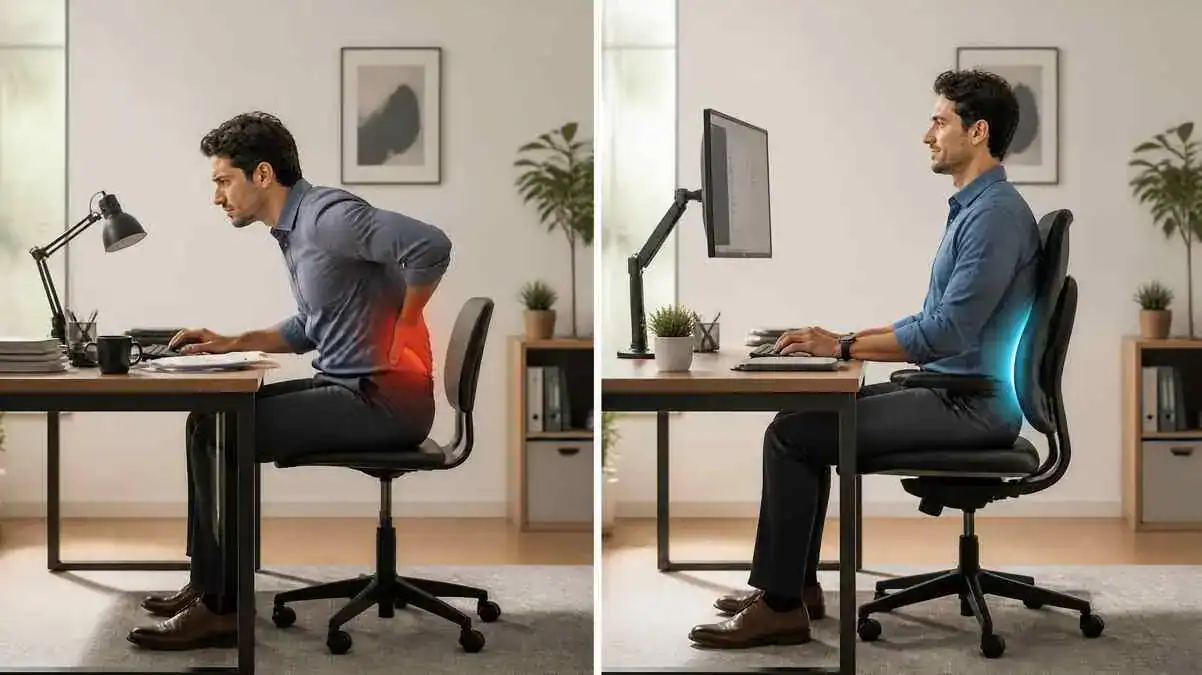
Poor posture adds extra strain. Slouching, sliding forward in the seat, or leaning toward a computer screen can flatten the natural curve of the lower back. As posture changes, pressure on the spinal discs may increase, especially in the lumbar spine. The muscles and ligaments then work harder to support the body, which can lead to back discomfort or pain.
Improving posture may help reduce these stresses. Learn the best sitting position for back pain to support the natural curve of the spine during long periods of sitting.
Weak or tight muscles may also play a role. Weak core muscles and lower back muscles may provide less support for the spine. Tight hip flexors or tight hamstrings can affect pelvic position and make comfortable sitting more difficult. Together, these factors may explain why some people experience lower back pain from sitting too long while others can sit comfortably for longer periods.
Poor ergonomic support can make the problem worse. A chair that does not fit properly, limited lumbar support, or a desk that encourages awkward posture may increase muscle strain and spinal loading. Small ergonomic adjustments and regular movement often help reduce these stresses and improve sitting comfort.
Back pain from sitting too long is only one possible reason for sitting-related discomfort. Other factors such as posture, lumbar support, muscle fatigue, and workstation setup may also contribute. Readers who want to learn more can explore the common causes of back pain when sitting.
Simple cause chain:
Prolonged sitting
↓
Reduced movement
↓
Muscle stiffness and posture fatigue
↓
Increased pressure on the spine
↓
Back discomfort or pain
Table of Contents
When to Worry
Mild Symptoms That Often Improve With Movement
Many cases of back pain from sitting too long are mild and improve with simple movement. The discomfort often develops gradually after long periods of sitting and may feel worse at the end of a workday or after a long drive. During longer trips, adjusting lumbar support while driving may help improve lower-back contact as part of the overall driving position.
Common mild symptoms include:
- A dull ache in the lower back
- Mild stiffness after sitting for a long time
- Discomfort that develops during desk work or long meetings
- Tightness that improves after standing or walking
- Temporary soreness after sitting all day
Some people notice that the first few steps after standing feel stiff or uncomfortable. In many cases, the body loosens up after moving around for a short time. Symptoms that improve with walking or changing position are often linked to sitting habits, posture, or prolonged inactivity rather than a serious problem.
Warning Signs That Should Not Be Ignored
Not all sitting-related discomfort is harmless. Certain symptoms deserve closer attention, especially when they continue to worsen or start interfering with daily life.
Warning signs include:
- Pain lasting longer than one week
- Pain that gradually becomes more severe
- Difficulty sitting through work, meetings, or driving
- Pain that regularly affects sleep
- Recurrent numbness or tingling
- Pain that spreads into the buttock or leg
- Old back problems that flare up repeatedly
These symptoms do not always mean a serious condition is present. However, they may suggest that the discomfort is not caused by sitting habits alone. Professional advice can help identify the reason and guide the next steps.
The following table can help distinguish common symptoms that often improve with movement from warning signs that deserve closer attention.
| Mild Symptoms | Warning Signs |
| Mild ache | Severe pain |
| Temporary stiffness | Leg weakness |
| Improves with movement | Recurrent numbness |
| Occasional discomfort | Pain getting worse |
When Professional Medical Evaluation Is Important
Some symptoms require prompt medical attention and should not be ignored.
Professional medical evaluation is important if back pain occurs with:
- Severe pain after a fall, accident, or other trauma
- New leg weakness
- Numbness around the groin or inner thighs
- Changes in bowel or bladder control
- Fever together with back pain
- Unexplained weight loss
These symptoms may point to conditions that need urgent evaluation.
Seeking timely medical care helps ensure that serious problems are recognized early and managed appropriately.
Symptoms / Signs
Common Symptoms of Back Pain From Sitting Too Long
The symptoms of back pain from sitting too long can vary from person to person. Some people notice mild soreness after sitting for several hours, while others experience discomfort much sooner.
Common symptoms include:
- A dull ache in the lower back
- Pressure or heaviness across the lower back
- Pain after sitting all day at work or school
- Pain when sitting too long without changing position
- Discomfort that makes the lower back feel tired or strained
- Mid-back discomfort, especially after leaning forward for long periods
Some people describe the feeling as, “My lower back hurts sitting,” while others notice that the discomfort gradually builds throughout the day. The pain is often worse after long desk sessions, driving, gaming, or other activities that involve prolonged sitting.
Back pain from gaming may also involve gaming-specific factors such as chair fit, screen position, control reach, and long periods with too few position changes.
Stiffness After Sitting
Stiffness is one of the most common signs of sitting-related back discomfort. Many people feel stiff when standing up after sitting for a long time. The lower back may feel tight, and the hips may not move comfortably at first. In some cases, a few steps of walking are enough to loosen the body and make movement feel easier. For some people, this pattern may also include hip pain when sitting or discomfort that becomes noticeable when standing up after a long period in a chair
Common stiffness-related symptoms include:
- Stiffness when standing up
- Needing a few steps to loosen up
- Lower back tightness
- Hip tightness
- Reduced bending comfort
- Feeling less flexible after sitting for long periods
These symptoms often appear after desk work, long drives, flights, or extended time on a couch. The stiffness may improve with gentle movement and regular position changes throughout the day.
Changes in Sitting Posture and Movement
Back discomfort can also change the way a person sits and moves.
Some people begin to slouch without noticing. Others slide forward in the chair or lean to one side to avoid pressure. These posture changes may happen gradually as the muscles become tired.
Common posture and movement changes include:
- Slouching or rounding the lower back
- Sliding forward in the seat
- Rounded shoulders
- Forward head posture
- Constantly changing sitting position
- Shifting weight frequently
- Crossing the same leg repeatedly
- Searching for a more comfortable position
Frequent repositioning does not always mean something serious is wrong. However, it may be a sign that the body is becoming uncomfortable during prolonged sitting.
Nerve-Related Symptoms
Some people experience symptoms that involve the nerves rather than only the muscles or joints.
Possible nerve-related symptoms include:
- Tingling
- Numbness
- Burning pain
- Pins and needles sensations
- Leg heaviness
- Weakness in the leg or foot
These symptoms may appear during sitting or after getting up from a chair. They can occur occasionally or happen more often over time.
Occasional mild tingling is not always a cause for concern. However, repeated numbness, increasing weakness, or symptoms that spread down the leg should not be ignored. Professional medical evaluation can help determine the cause and whether further care is needed.
Causes of Back Pain From Sitting Too Long
Prolonged Sitting and Reduced Movement
One of the most common causes of back pain from sitting too long is staying in the same position for extended periods. The body is designed to move regularly. When movement decreases, the muscles, joints, and other supporting tissues may become stiff and less comfortable.
Long periods of sitting can reduce circulation and limit normal joint movement. Over time, this may lead to muscle tightness, stiffness, and discomfort that becomes noticeable when standing up or changing position.
Many people notice that the back feels better after walking for a few minutes. This is because movement helps the body loosen up and reduces the effects of prolonged sitting.
If long hours at a computer are part of the daily routine, desk job back pain explains how workstation habits, posture, and prolonged sitting work together to cause back and neck discomfort.
Cause chain:
Prolonged sitting
↓
Reduced circulation
↓
Joint and muscle stiffness
↓
Pain when standing
Poor Sitting Posture
Poor sitting posture can place extra stress on the spine and surrounding tissues.
Common posture habits include:
- Slouching in the chair
- Sitting with a rounded lower back
- Leaning forward toward a screen
- Sitting away from the backrest
- Sliding forward in the seat
These habits can change the natural alignment of the spine. As posture worsens, the spinal discs and ligaments may experience more stress. The surrounding muscles then work harder to keep the body upright, which can lead to muscle fatigue and discomfort.
Poor posture is one of the reasons prolonged sitting becomes uncomfortable. Learn how poor posture can result in back pain and why changes in spinal alignment gradually increase strain on the back over time.
Cause chain:
Poor posture
↓
Disc and ligament stress
↓
Muscle fatigue
↓
Back pain
Increased Pressure on the Lumbar Spine
Sitting places more pressure on the lower back than standing. The pressure may increase even further when someone leans forward, slouches, or sits without proper support.
The lumbar spine carries much of the body’s weight while sitting. When posture changes, the spinal discs may experience higher disc pressure and increased spinal loading. This extra stress can make the lower back feel sore, tired, or uncomfortable after long periods of sitting.
Many people who ask, “Why does sitting hurt my lower back?” are often experiencing the combined effects of posture, spinal loading, and reduced movement rather than a single cause.
Weak or Tight Muscles
Muscles play an important role in supporting the spine during sitting.
Weak core muscles and weak glutes may provide less support for the lower back. As a result, the spine may rely more on passive structures such as discs and ligaments, which can lead to earlier fatigue during daily activities.
Tight muscles can also contribute to discomfort. Tight hip flexors and tight hamstrings are common in people who sit for long periods. These muscles may affect pelvic position and change the alignment of the lower back, making sitting less comfortable.
Cause chain:
Weak support muscles
↓
Reduced spinal support
↓
Earlier fatigue
↓
Pain during sitting
Poor Chair and Desk Setup
A poor workstation setup can place unnecessary strain on the body, even when sitting time is moderate. For people working from home, home office ergonomics can be harder to manage when fixed furniture, limited space, or everyday household furniture must serve as a workstation.
Common problems include:
- Desk height that does not match the chair
- A monitor positioned too low
- Reaching forward for the keyboard or mouse
- Armrests that are too high or too low
- Limited leg space under the desk
These issues may encourage awkward sitting positions and poor posture. Over time, the muscles of the back, neck, and shoulders can become overloaded, leading to discomfort during work or other seated activities.
Cause chain:
Poor workstation setup
↓
Poor posture
↓
Muscle overload
↓
Back discomfort
Existing Spine Conditions
Sometimes, sitting discomfort may be influenced by an existing spine condition.
Examples include:
- Herniated disc
- Degenerative disc disease
- Sciatica
- Spinal stenosis
These conditions can make the back more sensitive to prolonged sitting or increased disc pressure. Some people notice that symptoms become worse during long desk sessions, driving, or sitting on soft surfaces.
However, back pain while sitting does not automatically mean that a spine condition is present. Many cases are related to posture, muscle fatigue, or ergonomic factors. A healthcare professional can help determine whether an underlying condition may be contributing to the symptoms.
Several factors can contribute to back pain from sitting too long. The table below summarizes the most common causes and how they affect the back.
| Cause | How It Affects the Back |
| Prolonged sitting | Reduces movement, increases stiffness, and may cause discomfort when standing up. |
| Poor posture | Increases strain on the spine, muscles, and supporting tissues. |
| Weak muscles | Provides less support for the spine and may lead to earlier fatigue during sitting. |
| Poor desk setup | Encourages awkward posture and may overload the muscles of the back, neck, and shoulders. |
| Existing conditions | May increase sensitivity to sitting and make symptoms easier to trigger. |
What It May Indicate
It May Be a Sitting and Posture Problem
Many cases of back pain from sitting too long are related to sitting habits and posture rather than a serious medical condition.
A common sign is that the discomfort improves after standing up, walking, or changing position. The pain may appear mainly during sitting and gradually fade as the body starts moving again.
This pattern often points to posture-related strain or reduced tolerance for long periods of sitting. Some people develop what is sometimes called sitting intolerance, where the back becomes uncomfortable after a relatively short time in a chair.
Signs that may suggest a sitting and posture problem include:
- Symptoms improve after movement
- Discomfort occurs mainly while sitting
- Pain feels worse after long desk sessions
- Frequent shifting or repositioning in the chair
- Temporary stiffness after sitting that eases with walking
These signs do not prove a specific cause, but they often suggest that sitting habits and posture deserve closer attention.
Learn about the sitting mistakes that cause back pain so you can identify everyday posture habits that may be contributing to prolonged sitting discomfort.
It May Be an Ergonomic Problem
Sometimes the problem is not how long someone sits but how the workstation is set up.
A chair that does not fit properly may place extra stress on the back. Poor lumbar support can allow the lower back to round, while an incorrect seat depth may encourage sliding forward or sitting away from the backrest.
Monitor position also matters. A screen that is too low or too far away may cause forward leaning and make the upper and lower back work harder throughout the day.
Possible ergonomic clues include:
- Discomfort that appears mainly at a desk
- Symptoms that improve when using a different chair
- Difficulty finding a comfortable sitting position
- Feeling unsupported in the lower back
- Frequent adjustments to chair height or monitor position
When these patterns are present, ergonomic factors may be contributing to the discomfort.
Sometimes an Underlying Condition Plays a Role
In some cases, sitting discomfort may be influenced by an underlying condition.
Examples include disc problems, nerve irritation, arthritis, or spinal narrowing. These conditions can make the spine more sensitive to prolonged sitting and may increase discomfort during desk work, driving, or other seated activities.
This does not mean that everyone with sitting-related pain has a spine condition. Many people experience back discomfort because of posture, muscle fatigue, or workstation habits alone.
However, if symptoms continue to worsen, spread into the leg, or begin affecting daily activities, professional medical evaluation is important. A healthcare professional can help determine whether an underlying condition may be playing a role and recommend appropriate next steps.
What to Do
Change Position More Often
One of the simplest ways to manage back pain from sitting too long is to avoid staying in the same position for extended periods.
Even small posture changes can make a difference. Shifting position, adjusting the angle of the chair, or sitting upright again after slouching may help reduce muscle fatigue and relieve pressure on the back.
Standing regularly is also important. The body generally tolerates movement better than remaining still for hours at a time. Changing position throughout the day helps reduce stiffness and keeps the muscles and joints active.
Take Movement Breaks Every 20–30 Minutes
Regular movement breaks can help reduce the effects of prolonged sitting.
A short break does not need to be complicated. Standing for a minute, walking across the room, or gently stretching may help the body feel less stiff and more comfortable.
Simple movement ideas include:
- Stand up and change position.
- Walk for a minute or two.
- Stretch gently within a comfortable range.
- Roll the shoulders and move the neck slowly.
- Shift foot position or take a few extra steps.
The goal is not intense exercise. Small, regular movements may help reduce muscle fatigue, improve circulation, and prevent posture from becoming fixed in one position.
Improve Sitting Posture
Good sitting posture helps distribute pressure more evenly across the body and may reduce strain on the back.
The goal is not to sit perfectly all day. Instead, it is helpful to maintain a comfortable and balanced position that supports the natural shape of the spine.
Helpful posture habits include:
For a complete posture walkthrough, read how to sit properly in a chair to avoid back pain.
- Keep the spine in a neutral position.
- Relax the shoulders instead of rounding them forward.
- Keep both feet flat on the floor or on a footrest.
- Sit fully back in the chair.
- Avoid slouching for long periods.
- Keep the head aligned over the shoulders.
Posture naturally changes during the day. Paying attention to sitting habits and making small adjustments when needed may help improve comfort during long periods of desk work.
Stay Physically Active
Regular physical activity can help the body tolerate sitting better. Walking is one of the simplest options. Even short walks throughout the day encourage movement and may help reduce stiffness caused by prolonged sitting.
Activities that focus on strength, flexibility, and spinal mobility may also be helpful. Strong muscles around the trunk and hips support the spine, while flexible muscles allow the body to move more comfortably.
Helpful activities may include:
- Walking regularly
- Gentle strengthening exercises
- Stretching for flexibility
- Mobility exercises for the spine and hips
- Recreational activities that encourage movement
Staying active does not guarantee that discomfort will disappear, but regular movement supports overall spinal health and may reduce the effects of sitting for long periods.
Seek Professional Advice When Needed
Professional advice may be helpful when symptoms do not improve or begin affecting daily life.
A healthcare professional can evaluate symptoms, review posture and movement habits, and help determine whether other factors may be contributing to the discomfort.
Medical evaluation is especially important if pain becomes severe, symptoms continue to worsen, or warning signs such as numbness, weakness, or bowel or bladder changes appear.
Seeking help early can provide clarity and help guide safe next steps.
Ergonomic & Support Options
Chair Height and Sitting Position
A properly adjusted chair can make sitting more comfortable and may reduce stress on the back.
The feet should rest flat on the floor or on a stable footrest. The knees are often most comfortable when they sit at or slightly below hip level. This position helps maintain a more natural posture and reduces unnecessary strain on the lower back.
Seat height also matters. A chair that is too high may increase pressure behind the knees, while a chair that is too low can encourage slouching or excessive bending at the hips.
For better support, it helps to sit fully back in the chair so the backrest can support the spine instead of leaving the lower back unsupported.
Lumbar Support and Lower Back Comfort
The lower back naturally has a gentle inward curve called the lumbar curve. Good lumbar support helps maintain this curve while sitting.
Without enough support, the lower back may flatten or round over time. This change in posture can increase pressure on the spinal discs and may make sitting less comfortable.
Cause chain:
Unsupported lower back
↓
Lumbar curve flattens
↓
Disc pressure rises
↓
Discomfort increases
Lumbar support does not always require a special chair. Some people use built-in lumbar support, while others prefer an adjustable lumbar cushion or even a small rolled towel placed behind the lower back. Different types of lumbar support vary in design, adjustability, portability, and how they work with a chair.
The goal is gentle support that feels comfortable and helps maintain the natural shape of the spine rather than forcing the back into an exaggerated position.
If lumbar support hurts the back during longer sitting periods, it can help to distinguish support-related discomfort from discomfort that builds during prolonged sitting.
Monitor, Keyboard, and Desk Setup
Workstation setup can affect posture throughout the day.
The monitor is usually most comfortable when the top of the screen is near eye level and positioned at a comfortable viewing distance. This may help reduce the tendency to lean forward or drop the head toward the screen.
The keyboard and mouse should allow the arms to stay close to the body with the elbows bent at about 90 degrees. Reaching too far forward can place extra strain on the shoulders, neck, and back.
Small adjustments to desk setup often make sitting feel easier and may encourage better posture naturally.
Seat Depth and Cushion Support
Seat depth affects how well the chair supports the body.
A seat that is too deep may push against the back of the knees and encourage sliding forward. A seat that is too shallow may provide less support for the thighs and make sitting feel unstable.
Cushion firmness also matters. Very hard seats may create pressure points around the hips and contribute to tailbone pain when sitting. Very soft seats may allow the body to sink too deeply, making it harder to maintain a comfortable posture.
The most comfortable seat usually provides enough support to distribute pressure evenly while allowing the user to sit fully back in the chair.
Sit-Stand Desks and Movement-Friendly Workstations
Some people find it helpful to alternate between sitting and standing throughout the day.
A sit-stand desk allows the workstation to adjust to different positions. Instead of sitting continuously for hours, the user can switch between sitting and standing based on comfort and work needs. A good standing desk ergonomics setup can help the desk, monitor, keyboard, and mouse fit the user when working in the standing position.
Movement-friendly workstations encourage regular posture changes and small movements during the day. These adjustments may help reduce stiffness and prevent the body from staying in one position for too long.
The goal is not to stand all day. The goal is to create a balance between sitting, standing, and moving regularly.
FAQ
Does Sitting Too Long Cause Back Pain?
Yes. Sitting for long periods may contribute to back pain, especially when combined with poor posture, reduced movement, or an uncomfortable workstation setup. The risk often increases when someone sits in the same position for many hours without regular breaks.
Why Does My Back Hurt When I Sit Too Long?
Back pain during prolonged sitting often happens because the muscles become tired, posture changes over time, and pressure on the lower back increases. Reduced movement can also make the joints and muscles feel stiff or uncomfortable.
Can Sitting All Day Cause Lower Back Pain?
Yes. Sitting all day may increase pressure on the lumbar spine and reduce physical activity. Over time, this combination can contribute to lower back discomfort, muscle fatigue, and stiffness.
Why Does My Lower Back Hurt After Sitting?
Lower back pain after sitting is often related to muscle stiffness, posture fatigue, or increased pressure on the spine during prolonged sitting. Many people notice that the discomfort improves after standing or walking for a short time.
Why Does Standing Up After Sitting Hurt?
Standing up after sitting may feel uncomfortable because the muscles and joints have remained in one position for a long time. Temporary stiffness is common, especially after extended periods of sitting. In many cases, symptoms improve after a few steps.
Is Sitting Bad for the Back?
Sitting itself is not necessarily bad for the back. The problem usually comes from sitting for long periods without movement or sitting in uncomfortable positions.
The body is designed to move regularly. Changing position, standing occasionally, and maintaining good posture may help reduce the negative effects of prolonged sitting.
Can a Bad Chair Cause Back Pain?
Yes. A chair that does not fit the body well may contribute to back discomfort.
Common problems include poor lumbar support, incorrect seat height, inadequate seat depth, or armrests that force awkward positions. These issues may encourage poor posture and increase muscle fatigue during long sitting sessions.
Q: How to Fix Back Pain From Sitting Too Long?
Back pain from sitting too long may improve with simple daily habits. Changing position regularly, taking movement breaks every 20–30 minutes, improving sitting posture, adjusting chair and desk setup, staying physically active, and using lumbar support when needed may help reduce discomfort. If symptoms persist, worsen, or interfere with daily life, professional medical advice is recommended.
Does Lumbar Support Help?
Lumbar support may help some people sit more comfortably by supporting the natural curve of the lower back.
Good lumbar support is not meant to force the spine into an exaggerated position. Instead, it provides gentle support that may reduce strain and help maintain a more balanced posture during prolonged sitting.
How Can Someone Reverse the Effects of Sitting Too Long?
The effects of prolonged sitting may improve with regular movement and healthier sitting habits.
Walking more often, reducing long uninterrupted sitting sessions, improving workstation ergonomics, and staying physically active can help support spinal health and overall comfort.
Progress is often gradual. Small changes repeated consistently over time usually have a greater impact than trying to make large changes all at once.
Sources & References
These sources help explain how prolonged sitting affects the body and support the educational information presented throughout this article.
- Harvard Health — Don’t Take Back Pain Sitting Down
- Mayo Clinic — Sitting Risks: How Harmful Is Too Much Sitting?
- National Health Service (NHS) — Why We Should Sit Less
- NIAMS (NIH) — Back Pain: Symptoms, Types, and Causes
- UCLA Health Spine Care — Ergonomic and Proper Posture for Sitting
- Hospital for Special Surgery (HSS) — If You Have Back Pain When Sitting, Here’s How to Fix It
- Hinge Health — Sitting All Day Causing Lower Back Pain?
Soft CTA
Learn More About Sitting Comfort
Understanding back pain from sitting too long is only one part of creating a healthier and more comfortable sitting routine.
Readers who want to learn more may find these guides helpful:
- Why Sitting Causes Back Pain – Learn how prolonged sitting affects posture, muscles, and spinal comfort.
- Why Bad Posture Causes Back Pain – Explore how slouching, rounded shoulders, and poor sitting habits may contribute to discomfort.
- Best Sitting Position – Discover simple sitting adjustments that support better posture and comfort.
- Sitting Mistakes That Cause Pain – Learn about common habits that may increase strain on the back during daily activities.
- Complete Ergonomic Desk Setup – Understand how chair height, monitor position, desk setup, and workstation design affect sitting comfort.
Small improvements in posture, movement, and ergonomics can make sitting feel more comfortable and may help support long-term spinal health.
Update Note
Last Reviewed and Updated
Last reviewed: June 18, 2026
This article is intended for educational and informational purposes only.
Information about posture, ergonomics, and back pain continues to evolve as new research becomes available. Backrested reviews and updates articles regularly to improve accuracy, clarity, and usefulness.
This article does not provide medical diagnosis, treatment, or personalized healthcare advice.
If symptoms are severe, continue to worsen, or raise concerns, professional medical evaluation is important. A qualified healthcare professional can provide advice based on individual health needs and circumstances.
10 thoughts on “Back Pain From Sitting Too Long: Why It Happens, Warning Signs, and Relief Tips”
Comments are closed.