
TL;DR
Key Points
- Poor posture can change how the spine carries weight, which may increase strain on the back over time.
- Slouching, forward-head posture, and unsupported sitting may place extra stress on muscles, joints, ligaments, and spinal discs.
- Posture-related back pain often develops gradually, especially during long desk work, prolonged sitting, or extended screen use.
- Regular movement breaks, proper lumbar support, and a well-adjusted workstation may help reduce posture-related discomfort.
- Persistent pain, worsening symptoms, or numbness, tingling, or weakness should be evaluated by a healthcare professional.
Quick Answer
How Can Poor Posture Result in Back Pain?
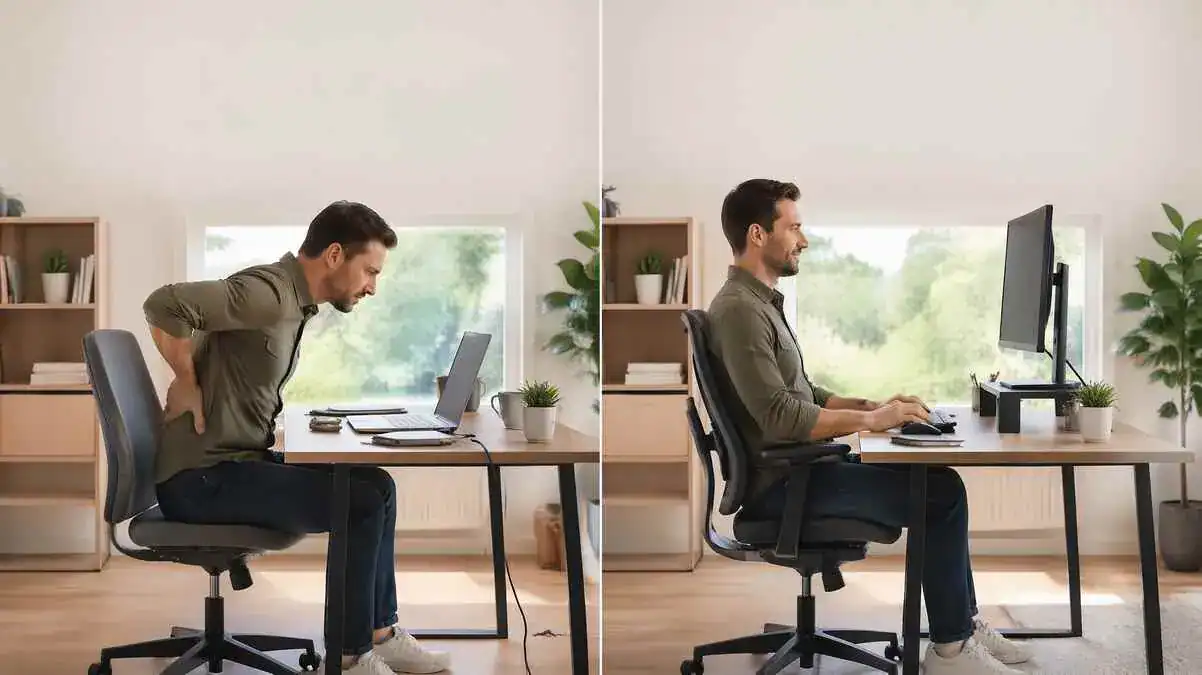
How can poor posture result in back pain? Poor posture can result in back pain by moving the spine away from its natural alignment. When this happens, body weight is distributed less evenly through the spine. This may increase pressure on the spinal joints, spinal discs, ligaments, and muscles.
Over time, these tissues work harder than they should, which may contribute to posture-related back pain.
Poor posture and back pain usually develop gradually rather than all at once. Slouching, forward-head posture, or sitting without adequate lower-back support can change how forces move through the spine. As these changes continue, the back may begin to feel stiff, tired, sore, or uncomfortable, especially after long periods of sitting, desk work, or screen use.
Not everyone with poor posture develops back pain, and posture is not always the only cause of back pain. However, poor posture may contribute to ongoing strain and can make existing discomfort worse.
Understanding how poor posture affects the spine helps explain why healthy posture habits and regular movement are important for supporting spinal alignment and everyday comfort.
A properly arranged ergonomic desk setup can also support healthier posture by helping the workstation fit the person rather than forcing the body into awkward positions.
Table of Contents
When to Worry
Mild Signs to Monitor
Mild posture-related discomfort is common after long periods of sitting or desk work. These symptoms often improve after changing position, moving around, or taking a short break.
Signs to monitor include:
- Dull aching after sitting or desk work
- Mild stiffness that improves with movement
- Temporary discomfort after long screen use
- Mild posture fatigue or a feeling that it is difficult to sit upright comfortably
These symptoms may suggest that poor posture is placing extra strain on the spine and supporting muscles. They do not always point to a serious problem, but they should not be ignored if they become more frequent.
Signs That Need Professional Evaluation
Some symptoms deserve medical evaluation because they may have causes beyond posture alone. A healthcare professional can help determine whether poor posture is contributing to the problem or whether another condition needs attention.
Seek professional evaluation if there is:
- Back pain that lasts several weeks
- Pain that keeps returning despite posture changes
- Pain that interferes with work, driving, sleep, or daily activities
- Persistent numbness, tingling, or weakness in an arm or leg
- A noticeable change in spinal shape or overall posture
Persistent or worsening symptoms should not be assumed to be caused only by poor posture.
Urgent Warning Signs
Although posture-related back pain usually develops gradually, some symptoms require urgent medical attention because they may signal a more serious condition.
Seek immediate medical care if any of the following occur:
- Severe back pain after a fall, accident, or heavy lifting injury
- Loss of bladder or bowel control
- Numbness in the groin or inner thighs
- Progressive weakness in the arms or legs
- Difficulty walking or loss of balance
- Fever, unexplained weight loss, or a history of cancer together with new back pain
These warning signs are not typical of posture-related discomfort and should be evaluated without delay.
Symptoms / Signs
Common Poor Posture Symptoms
People with poor posture and back pain often notice symptoms that build gradually during the day instead of appearing suddenly. The discomfort usually becomes more noticeable after prolonged sitting, desk work, or extended screen use.
Common poor posture symptoms include:
- Lower-back aching during or after sitting
- Neck tightness
- Shoulder tension
- Burning or aching in the upper back
- A heavy head feeling, especially during computer or phone use
- Stiffness after sitting for a long time
- Pain when standing up after sitting
These symptoms may come and go. They often become worse after staying in one position for too long and may ease after changing position or moving around.
Posture Changes People May Notice
Along with discomfort, some people gradually develop visible posture changes.
Because these changes often happen slowly, they can be easy to overlook.
Common signs of poor posture include:
- Slouching while sitting or standing
- Rounded shoulders
- Forward-head posture
- Chin jutting forward
- Leaning to one side
- Swayback posture
- Difficulty sitting upright without support
These posture changes do not always cause pain right away, but they can place extra strain on the muscles and spine over time.
Sitting-Related Signs
Posture-related discomfort is often linked to prolonged sitting. Many people notice symptoms becoming more obvious during work, studying, driving, or other activities that require staying seated for long periods.
Common sitting-related signs include:
- Pain that develops after 20–60 minutes of sitting
- Frequent shifting, fidgeting, or changing position to stay comfortable
- Using the hands, a pillow, or a rolled towel to support the lower back
- Lower-back pressure while driving
- Symptoms that become worse after desk work or long screen sessions
These patterns may suggest that sitting habits, posture, or workstation setup are contributing to discomfort rather than a sudden injury.
Causes of How Poor Posture Can Result in Back Pain
Poor Posture Changes Spinal Alignment
Poor posture can move the spine away from its natural curves. This helps explain how can poor posture result in back pain. When the spine loses its balanced position, body weight is no longer distributed evenly.
This may affect the cervical spine in the neck, the thoracic spine in the upper back, and the lumbar spine in the lower back.
Slouching Can Increase Back Strain
Slouching rounds the back and collapses the chest. Slouching is one of the most common sitting mistakes that cause back pain. Recognizing these everyday habits can help reduce unnecessary strain on the spine.
This posture stretches some tissues while forcing others to work harder to support the body. Over time, slouching may increase stress on the spinal joints, spinal discs, ligaments, and supporting muscles. This can lead to stiffness, soreness, or back pain from poor posture.
Forward-Head Posture Adds Neck and Upper-Back Load
Forward-head posture often develops during phone, laptop, or computer use. Instead of staying balanced over the shoulders, the head gradually moves forward.
When this happens, the neck and upper-back muscles work harder to support the head. This may lead to neck pain, shoulder tension, and upper-back discomfort.
Unsupported Lumbar Posture Can Flatten the Lower Back
A lack of lumbar support may allow the pelvis to roll backward. This can flatten the natural curve of the lower back.
When the lumbar curve becomes flatter, pressure may increase on the spinal discs and ligaments. This is one reason sitting with poor posture can contribute to lower-back discomfort. A backward pelvic position may also shift more seated pressure toward the base of the spine, which may contribute to tailbone pain when sitting.
Understanding how lumbar support helps posture can clarify what this support can and cannot change while sitting.
Poor Posture Can Create Muscle Fatigue
Poor posture can make the stabilizing muscles work harder to keep the body upright. These muscles may stay active for long periods without enough rest.
This extra effort may lead to tightness, burning, soreness, or fatigue in the neck, shoulders, upper back, or lower back.
Poor Posture Can Create Muscle Imbalance
Long-term slouching may weaken the core and back muscles that help support upright posture. At the same time, the chest muscles and hip flexors may become tighter.
This muscle imbalance can make healthy posture harder to maintain. As posture control becomes more difficult, the back may begin to feel tired more quickly.
Poor Posture May Increase Disc and Joint Stress
Poor alignment changes how force travels through the spine. Instead of spreading body weight evenly, certain areas may absorb more pressure than others.
This may increase stress on the spinal discs and facet joints. Over time, repeated loading may contribute to posture-related back pain or stiffness.
Prolonged Sitting Can Make Posture Worse
Long periods of sitting reduce movement and may decrease blood flow to working muscles. As muscles become tired, slouching becomes easier.
This can create a cycle: prolonged sitting leads to muscle fatigue, muscle fatigue leads to poorer posture, and poorer posture may lead to stiffness when standing or bending.
To better understand why sitting causes back pain, including how prolonged sitting affects the spine and surrounding muscles, read our complete guide.
Poor Chair Fit Can Add Uneven Strain
A poorly fitted chair may encourage leaning, twisting, sliding forward, or perching on the edge of the seat. These sitting habits move the body away from balanced support.
When the body leans or twists for long periods, one side of the back may carry more load than the other. This can contribute to one-sided tightness, pressure, or discomfort.
Stress Can Increase Posture-Related Tension
Stress can also change how the body naturally holds itself. Some people begin to hunch their shoulders, tighten their neck muscles, or lean forward during a busy workday.
This added muscle tension may increase neck pain, shoulder tightness, and upper-back discomfort, especially during long hours of desk work or screen use.
The table below summarizes how common posture habits may affect different areas of the back.
Poor Posture Pattern vs How It May Affect the Back
| Posture Pattern | What Happens | Possible Discomfort |
| Slouching | Rounds the back and reduces natural spinal alignment | Lower-back aching, stiffness, muscle fatigue |
| Forward-head posture | Moves the head in front of the shoulders, increasing neck and upper-back load | Neck tightness, shoulder tension, upper-back discomfort |
| Unsupported lumbar posture | Flattens the natural curve of the lower back | Lower-back pressure, soreness after sitting |
| Swayback posture | Changes how body weight is distributed through the spine | Lower-back strain, hip discomfort, muscle fatigue |
| Leaning to one side | Places uneven pressure on one side of the spine and supporting muscles | One-sided back tightness or discomfort |
| Sitting too long | Reduces movement and allows muscles to tire more easily | Stiffness, posture fatigue, pain when standing after sitting |
What It May Indicate
Posture-Related Pain
Posture-related pain often develops gradually during sitting, screen use, or desk work. It usually feels worse after staying in one position for too long.
This type of discomfort often improves with movement, changing position, or using better support. It may suggest that poor posture and back pain are linked to everyday sitting habits.
Muscle Tension
Tightness, muscle knots, or a burning feeling in the neck, shoulders, or back may point to muscle tension. This often happens when the same muscles stay active for long periods.
Prolonged hunching, stress, or forward-head posture may force these muscles to work harder than they should. Over time, the area may begin to feel sore, tired, or tense.
Ergonomic Strain
Symptoms that become worse during desk work but improve away from the workstation may suggest ergonomic strain. This often means the work setup is placing unnecessary stress on the body.
Learn more about desk job back pain to understand how prolonged computer work, workstation setup, and static sitting contribute to both back and neck discomfort.
The problem may be related to monitor height, chair position, desk height, keyboard reach, or mouse placement.
Chair Support Problems
Lower-back pressure, sliding forward in the chair, or sitting on the edge of the seat may suggest poor chair support. These signs often appear when the body cannot rest comfortably against the backrest.
Poor lumbar support, incorrect seat depth, or improper chair height may force the lower back to work harder throughout the day.
Possible Nerve-Related Symptoms
Tingling, numbness, burning, or weakness that travels into the arms or legs should be taken seriously. These symptoms may involve more than posture-related muscle strain.
A healthcare professional should evaluate these symptoms if they occur frequently, become worse, or do not improve.
The following table helps distinguish common posture-related discomfort from warning signs that deserve professional evaluation.
Posture-Related Pain vs Warning Signs
| Symptom Type | Common Pattern | What to Do |
| Mild stiffness | Improves after moving or changing position | Continue regular movement and monitor symptoms |
| Desk-related aching | Develops during or after prolonged sitting or desk work | Review posture and workstation setup |
| Pain lasting several weeks | Does not improve or keeps returning | Seek professional evaluation |
| Numbness or weakness | May affect the arms or legs and become persistent | Seek prompt medical evaluation |
| Severe pain after an injury | Starts after a fall, accident, or heavy lifting | Seek immediate medical attention |
What to Do
Start With Posture Awareness
Posture awareness is the first step toward healthier sitting habits. Notice patterns such as slouching, rounded shoulders, chin-forward posture, or a collapsed lower back.
The goal is not to force a stiff posture. Instead, aim for a relaxed neutral spine where the body feels supported rather than tense.
Learning the best sitting position for back pain can make it easier to maintain healthy spinal alignment throughout the day.
Take Movement Breaks
Movement helps reduce the strain that builds during prolonged sitting. Stand up, walk, or stretch every 30–60 minutes.
Changing position before discomfort develops may help reduce stiffness, muscle fatigue, and posture-related back pain.
Reduce Long Static Sitting
Long periods of sitting make poor posture easier to maintain without noticing. Alternating between sitting and standing, when possible, helps reduce time spent in one fixed position.
Breaking long desk tasks into smaller blocks also gives the back, hips, and shoulders more opportunities to move.
Support the Lower Back
Proper lower-back support helps the spine stay closer to its natural curve. Understanding what lumbar support is and how it works can help explain its role in supporting the lower back while sitting. Sit back against the chair instead of perching on the front edge.
If the chair does not provide enough lumbar support, a small pillow or rolled towel may help. The support should feel comfortable and gentle, not force the back into an exaggerated arch.
Keep the Body Balanced
A balanced sitting position helps reduce uneven strain on the spine. Keep both feet supported and the hips level while sitting.
Avoid leaning to one side for long periods. Prolonged cross-legged sitting may also create uneven pressure and make healthy posture harder to maintain.
Seek Professional Help When Needed
Professional evaluation is important if back pain persists, becomes worse, or limits daily activities. Medical advice is also recommended if symptoms include numbness, tingling, or weakness.
These symptoms may involve more than posture-related strain and should not be ignored.
Ergonomic & Support Options
Chair Support
A supportive chair helps the spine stay closer to its natural position. It should support the natural lumbar curve instead of allowing the lower back to collapse.
Adjust the seat height so the feet rest flat on the floor or on a footrest. The thighs should remain roughly parallel to the floor, with minimal pressure behind the knees.
Lumbar Support
Lumbar support should fit the natural curve of the lower back. It should provide gentle support without forcing the spine into a stiff or exaggerated arch. The guide to where lumbar support should be explains how to position and adjust the support for comfortable lower-back contact.
If the chair does not provide enough support, a small pillow or rolled towel may improve comfort during sitting.
For a complete step-by-step guide on how to sit properly in a chair to avoid back pain, including chair adjustments and workstation setup, read this guide.
Monitor Setup
Place the monitor at or slightly below eye level. This helps reduce the need to bend the neck forward during screen use.
A monitor that is too low may encourage forward-head posture, while one that is too high may cause the chin to lift and strain the neck.
Readers who want step-by-step guidance can learn how to set the correct monitor height for comfortable viewing and a better-aligned workstation.
Keyboard and Mouse Setup
Keep the keyboard and mouse close to the body. Reaching too far forward can increase tension in the shoulders and upper back.
The elbows should stay close to 90 degrees, and the shoulders should remain relaxed to reduce unnecessary strain.
Desk and Chair Height
The desk and chair should work together to support a comfortable sitting position. If either is too high or too low, the body may begin hunching, reaching, or shrugging without realizing it.
A well-adjusted setup helps the body stay relaxed and supported. The goal is to reduce posture-related strain rather than force a perfectly upright position.
Work Area Setup
Keep frequently used items within easy reach. This may include the keyboard, mouse, phone, notebook, or other work tools.
Keeping essential items nearby helps reduce repeated twisting, leaning, and one-sided strain throughout the workday.
Home and Driving Support
Soft sofas and sink-in chairs can allow the pelvis to tilt backward and the spine to lose its natural curves. This may make poor posture and back pain more noticeable during prolonged sitting.
When driving, keep the lower back supported and sit close enough to the steering wheel to avoid leaning forward for long periods. These adjustments may help reduce back pain while driving, especially when the body stays in the same position for a long time.
The table below summarizes common ergonomic problems and simple adjustments that may help improve sitting comfort.
Ergonomic Problem vs Better Setup
| Problem | Possible Effect | Better Setup |
| Monitor too low | Encourages forward-head posture and neck strain | Keep the monitor at or slightly below eye level |
| Keyboard too far away | Causes reaching and shoulder tension | Keep the keyboard and mouse close to the body |
| No lumbar support | Flattens the lower-back curve and increases pressure | Use built-in lumbar support or a small pillow or rolled towel |
| Chair too low or too high | Changes hip, knee, and arm position, leading to poor posture | Adjust the chair so the feet rest flat and the thighs stay roughly parallel to the floor |
| Items out of reach | Encourages repeated twisting or leaning | Keep frequently used items within comfortable reach |
FAQ
How can poor posture result in back pain?
Poor posture can result in back pain by moving the spine away from its natural alignment. This changes how body weight passes through the spine and may increase strain on the muscles, spinal discs, ligaments, and joints.
Over time, repeated stress may lead to stiffness, muscle fatigue, and discomfort that gradually becomes more noticeable, especially during prolonged sitting or desk work.
Can poor posture cause back pain?
Yes. Poor posture can contribute to back pain by increasing mechanical strain on the spine and surrounding muscles. It is more likely to happen during long periods of sitting, standing, or screen use.
However, back pain does not always mean poor posture is the only cause, and persistent or severe symptoms should be evaluated by a healthcare professional.
Does slouching cause back pain?
Slouching can contribute to back pain because it rounds the back and may flatten the natural curve of the lower back. This may place extra pressure on the spinal discs, ligaments, and supporting muscles.
Over time, repeated slouching may lead to lower-back discomfort, stiffness, and muscle fatigue.
Can poor posture cause lower back pain?
Yes. Poor posture can contribute to lower-back pain when the pelvis rolls backward and the natural curve of the lumbar spine becomes flatter.
This may increase pressure on the lower back and make pain or stiffness more noticeable after sitting for long periods.
Can bad posture cause upper back pain?
Yes. Bad posture may contribute to upper-back pain, especially when forward-head posture and rounded shoulders place extra demand on the neck and upper-back muscles.
This can lead to shoulder tension, neck strain, and burning or tightness between the shoulder blades.
How does poor posture affect the spine?
Poor posture affects the spine by changing its natural curves and creating uneven force distribution. This may increase stress on the spinal joints, discs, ligaments, and muscles.
Some muscles work harder to keep the body upright while others become less active, which can contribute to muscle fatigue over time.
Can bad posture damage your back over time?
Bad posture may contribute to back problems over time by repeatedly increasing stress on the spinal joints, discs, and surrounding tissues. While poor posture alone does not always cause lasting damage, ongoing strain may increase the risk of chronic discomfort.
Persistent, worsening, or limiting symptoms should be evaluated by a healthcare professional.
Can sitting with poor posture cause back pain?
Yes. Sitting with poor posture for long periods may increase the risk of back pain. Unsupported lumbar posture, slouching, reduced movement, and muscle fatigue can increase pressure on the lower back and may lead to stiffness when standing after sitting.
What happens to your spine when your posture is poor?
When posture is poor, the spine carries body weight less evenly. This posture imbalance may increase mechanical stress on the spinal discs and joints while making the supporting muscles work harder.
Over time, this can contribute to stiffness, muscle fatigue, and posture-related discomfort.
Can correcting posture reduce back pain?
Correcting posture may help reduce posture-related back pain for some people. Building posture awareness, maintaining a neutral spine, taking regular movement breaks, using proper lumbar support, and improving the workstation setup can all help reduce unnecessary strain. Improvements often happen gradually rather than immediately.
Is poor posture reversible?
In many cases, poor posture can improve with consistent habit changes. Better posture awareness, stronger support muscles, regular movement, and ergonomic improvements can gradually make it easier to maintain healthier posture. The amount of improvement varies from person to person.
Why does my back hurt when I have good posture?
Back discomfort may happen when a person first begins improving posture because the supporting muscles are not yet used to the new position.
Overcorrecting, sitting too rigidly, or holding one posture for too long may also cause temporary posture fatigue. If the pain is severe, persistent, or continues despite good posture habits, it should be evaluated by a healthcare professional.
Quick Posture Checklist
Before finishing, use this simple checklist to see whether everyday sitting posture supports healthy spinal alignment.
- Ears stay over the shoulders
- Shoulders remain relaxed instead of rounded or shrugged
- Back stays supported by the chair
- Feet rest flat on the floor or on a footrest
- Elbows stay close to 90 degrees
- Monitor sits at a comfortable viewing height
- Move or change position every 30–60 minutes
Sources & References
Suggested Source Types
The information in this article should be supported by high-quality, evidence-based resources such as:
- NIH / PubMed Central – Spinal Posture and Low Back Pain
- Harvard Health Publishing – Posture and Back Health
- Spine-health – Is Poor Posture Causing Your Back Pain?
- SpineMD – Can Bad Posture Cause Back Pain?
- NIH / PubMed – Body Posture and Syndromes of Back Pain
- NIH / PubMed Central – The Relation of Forward Head Posture with Back Muscle Endurance
- NIH / PubMed – Effects of Slouching and Muscle Contraction on the Strain of the Iliolumbar Ligament
- Medical News Today – Forward Head Posture: Definition, Cause, and How to Treat It
- Sunway Medical Centre – Ergonomics: Back Safety
- Ribera Salud – 10 Ergonomic Tips to Prevent Back Pain
- The Spine MDT – The Connection Between Posture and Back Pain
- LiveWell Health – Back Pain and Posture – How Poor Posture Impacts Your Spine
Whenever possible, use recent publications and official guidance to keep posture and ergonomics recommendations accurate, practical, and medically responsible.
Soft CTA
Related Backrested Guides
Understanding how poor posture affects the spine is only one part of protecting long-term back health. These related guides explain other common causes of sitting-related discomfort and practical ways to improve everyday posture and sitting habits.
Why Sitting Causes Back Pain — Learn how prolonged sitting increases pressure on the spine, reduces movement, and contributes to stiffness and back discomfort.
Best Sitting Position for Back Pain — Discover how a neutral sitting posture, proper body alignment, and healthy sitting habits may help reduce unnecessary strain on the back.
How to Sit Properly in a Chair to Avoid Back Pain — Follow a simple step-by-step guide to adjust a chair, support the lower back, and create a more comfortable sitting position for work or daily activities.
Update Note
Last Reviewed
Last reviewed: July 8, 2026
1 thought on “How Can Poor Posture Result in Back Pain? How It Affects Your Spine”
Comments are closed.