
TL;DR
Key Takeaways
Sitting mistakes that cause back pain often develop gradually during work, study, driving, gaming, or relaxing.
Small habits can increase stress on the lower back, neck, and shoulders over time. Slouching, leaning forward, poor chair support, and sitting too long can all contribute to unnecessary strain.
An ergonomic chair can help, but it cannot correct poor sitting habits on its own. Good posture also requires proper chair adjustment, regular posture checks, and frequent movement.
Movement is just as important as posture. Even good posture can become uncomfortable if the body stays in one position for too long.
Most posture-related discomfort improves with healthier sitting habits, regular movement breaks, and simple workstation adjustments.
Seek prompt medical attention if back pain occurs with numbness, weakness, loss of bladder or bowel control, groin numbness, fever, severe pain after an injury, or unexplained weight loss.
Quick Answer
What Are the Most Common Sitting Mistakes That Cause Back Pain?
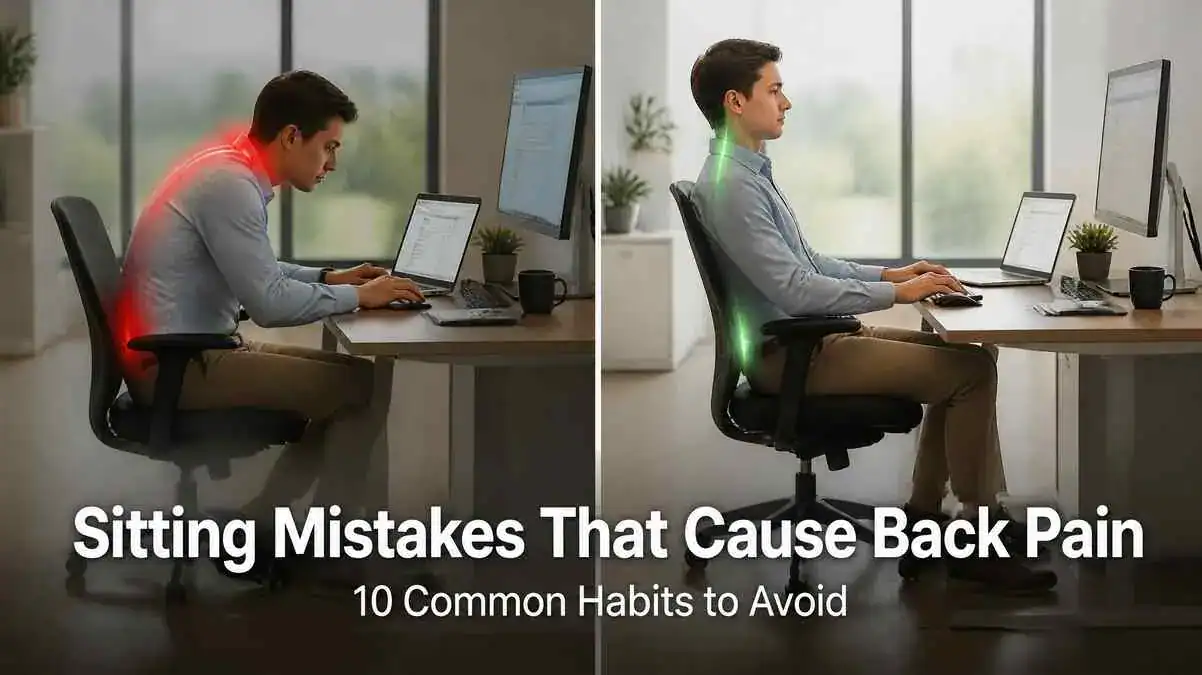
The most common sitting mistakes that cause back pain include slouching, leaning forward, sitting too long without movement, poor chair adjustment, poor workstation setup, and inadequate lumbar support.
These habits may seem harmless at first. Over time, they can place extra stress on the spine, lower back, neck, shoulders, hips, and supporting muscles.
Common sitting mistakes include:
- Slouching with a rounded back and rounded shoulders
- Leaning forward toward a laptop, keyboard, monitor, or steering wheel
- Sitting on the edge of the chair without back support
- Crossing the legs for long periods
- Sitting too long without movement breaks
- Using a poorly adjusted chair
- Working at a poorly arranged desk or monitor setup
- Sitting without proper lumbar support
- Staying in one position for too long
- Ignoring posture throughout the day
These habits can make the back muscles work harder than necessary. They may also increase neck strain, shoulder tension, muscle fatigue, and discomfort while sitting or when standing after sitting.
Correcting these habits can reduce unnecessary strain on the spine and improve sitting comfort during work, study, driving, and daily activities.
Reviewing the entire ergonomic desk setup can also help prevent many of these workstation-related sitting mistakes from developing.
Table of Contents
When to Worry
When Sitting-Related Back Pain May Need Medical Attention
Many sitting mistakes that cause back pain lead to mild, posture-related discomfort. Symptoms often feel worse after prolonged sitting and improve after standing, walking, or changing position.
Usually monitor symptoms such as:
- Mild stiffness after long sitting
- Temporary lower back discomfort
- Neck or shoulder tightness
- Pain that improves after standing or walking
- Muscle fatigue after desk work
A professional evaluation is recommended if symptoms do not improve or begin interfering with everyday activities.
Seek professional evaluation if:
- Pain lasts several weeks
- Pain interferes with work
- Pain interrupts sleep
- Numbness or tingling keeps returning
- Symptoms continue despite improving sitting habits
Some symptoms require urgent medical attention because they may indicate something more serious than posture-related discomfort.
Seek urgent medical care if back pain occurs with:
- Loss of bladder or bowel control
- Groin numbness
- Significant leg weakness
- Severe pain after an injury
- Fever with back pain
- Unexplained weight loss
- A history of cancer, infection, or osteoporosis with new back pain
These warning signs should not be ignored. Ergonomic improvements can help many sitting-related problems, but they are not a substitute for medical care when serious symptoms are present.
The table below summarizes common posture-related discomfort and warning signs.
Normal Sitting Discomfort vs Warning Signs
| Usually Improves With Movement | Needs Medical Evaluation |
| Mild stiffness | Persistent pain |
| Temporary muscle tightness | Recurring numbness |
| Pain after long sitting | Weakness |
| Neck tightness | Changes in walking |
| Back fatigue | Loss of bladder or bowel control |
Symptoms / Signs
Common Signs That Sitting Habits May Be Causing Back Pain
Sitting habits may contribute to back pain when discomfort appears after long periods of sitting, desk work, driving, or relaxing. These signs do not always point to a serious problem, but they may suggest that the body needs better support, improved posture, or more frequent movement.
Common signs include:
- Lower back stiffness
- Pressure in the lower back while sitting
- Hip stiffness
- Neck tightness
- Shoulder tightness
- Mid-back aching
- Pain after desk work
- Pain after driving
- Back pain when standing after sitting
- Feeling unable to sit comfortably for long
- Frequently changing position
- Fidgeting in the chair
- Pain that improves after walking
- Tight hips after sitting
- Short, stiff steps immediately after standing
These symptoms often become more noticeable after the body stays in one position for too long. They commonly ease after standing, walking, or changing position.
Observable Sitting Behaviors
Many sitting habits develop gradually and can be easy to overlook until discomfort becomes more frequent.
Common sitting behaviors include:
- Rounded shoulders
- Slouching
- Forward-head posture
- Leaning toward the monitor
- Leaning to one side
- Resting the head on one hand
- Difficulty maintaining an upright posture
- Constant shifting in the chair
Recognizing these behaviors early can help identify sitting mistakes that cause back pain before they become part of a daily routine.
Workspace Clues
The workstation itself can also provide useful clues. Discomfort often appears during computer work, typing, mouse use, or extended screen time.
Workspace-related signs include:
- Neck pain after computer work
- Headaches after looking down for long periods
- Tingling during prolonged sitting
- Numbness that improves after changing position
- Shoulder fatigue after keyboard or mouse use
These signs may indicate posture strain, poor monitor placement, or repeated reaching during desk work. If numbness, tingling, or weakness continues or becomes worse, a professional evaluation is recommended.
Causes of Sitting Mistakes That Cause Back Pain
Why Do Sitting Mistakes That Cause Back Pain Matter?
Sitting mistakes that cause back pain rarely result from one habit alone. They usually develop from a combination of poor sitting posture, prolonged static sitting, inadequate chair support, and a poorly arranged workstation.
Small habits repeated every day can gradually increase stress on the back muscles, joints, ligaments, and spinal discs.
To better understand why sitting causes back pain, including what happens inside the spine during prolonged sitting, read our complete guide.
The 10 common mistakes below explain how everyday sitting habits may affect the lower back, neck, shoulders, hips, and overall sitting comfort.
The table below provides a quick overview of the most common sitting mistakes and why they may contribute to discomfort.
The 10 Common Sitting Mistakes That Cause Back Pain
| Sitting Mistake | Why It Can Contribute to Back Pain |
| Slouching | Increases disc and ligament loading |
| Leaning forward | Flattens the natural lumbar curve |
| Sitting on the edge of the chair | Removes back support |
| Staying in one position | Causes muscle fatigue and stiffness |
| Sitting too long | Increases spinal loading |
| Sitting without lumbar support | Encourages slumping |
| Poor chair adjustment | Creates poor body alignment |
| Poor desk setup | Increases neck and back strain |
| Crossing legs for long periods | Creates uneven pelvic loading |
| Ignoring posture | Allows small habits to accumulate |
1. Slouching While Sitting
Slouching is one of the most common examples of bad sitting posture. It usually includes a rounded back, rounded shoulders, and a forward-head posture.
This often happens while looking down at a laptop, phone, or paperwork. As the body folds forward, the natural lumbar curve becomes flatter.
Simple cause chain:
Slouching
↓
Increased spinal disc and ligament loading
↓
Muscle fatigue
↓
Lower back, neck, and shoulder discomfort
2. Leaning Forward Instead of Sitting Back
Leaning forward commonly happens during desk work, laptop use, or driving. Many people reach toward the keyboard, move closer to the monitor, or lean toward the steering wheel without realizing it.
This posture can flatten the lumbar curve, increase pressure on the lower back, and place extra strain on the neck and mid-back muscles.
3. Sitting on the Edge of the Chair
Many people unknowingly perch on the edge of the chair while working. This removes support from the backrest.
Without proper back support, the lower back loses lumbar support more easily. The pelvis may also move into a less stable position, increasing spinal loading and causing the muscles to tire sooner.
4. Staying in One Position Too Long
Even good posture can become uncomfortable if it is held for too long. The body is designed to move rather than remain in one fixed sitting position all day.
Holding the same position may lead to static muscle loading, joint stiffness, and reduced circulation. As comfort decreases, frequent shifting often follows.
Simple cause chain:
One position
↓
Muscle fatigue
↓
Joint stiffness
↓
Reduced comfort
5. Sitting Too Long Without Movement Breaks
This mistake is different from simply staying in one posture. It focuses on prolonged sitting itself.
Long sitting sessions keep pressure on the lower spine and spinal discs while reducing circulation and movement. Over time, the muscles may become stiff.
This commonly happens during office work, long meetings, driving, gaming, or watching television.
Some people also notice back pain when standing after sitting because the body has remained still for too long.
If you often experience back pain from sitting too long, learn why prolonged sitting affects the spine and what simple habits may help reduce discomfort.
6. Sitting Without Proper Lumbar Support
The lower back naturally has a gentle inward curve. Without proper lumbar support, this curve may flatten, making slumping more likely. As posture gradually changes, forward-head posture and ongoing lower-back discomfort may develop.
Understanding how lumbar support helps posture can clarify the difference between supporting seated alignment and permanently correcting posture.
Lumbar support should gently support the natural curve of the lower back. It should feel comfortable rather than pushing firmly into the spine.
7. Using a Poorly Adjusted Chair
A poorly adjusted chair makes maintaining proper sitting posture more difficult. The chair may be too high, too low, too soft, or have an incorrect seat depth.
If the chair is too high, the feet may hang above the floor. If it is too low, the knees may bend excessively. Incorrect seat depth can place pressure behind the knees or create uneven weight distribution.
Seat fit and sitting position can also change where pressure is concentrated. When that pressure reaches the base of the spine, it may contribute to tailbone pain when sitting.
Armrests also matter. Armrests that are too high may raise the shoulders, while armrests that are too low may encourage leaning or slouching.
8. Poor Desk and Monitor Setup
A poorly arranged workstation can gradually pull the body out of alignment.
This may happen when the monitor is too low, too high, or positioned off-center. The same problem can occur when the keyboard or mouse is too far away or the desk height is not appropriate.
These workstation problems are a common cause of desk job back pain, particularly for people who spend most of the day working at a computer.
Simple cause chain:
Poor workstation setup
↓
Forward-head posture
↓
Neck strain
↓
Upper-back fatigue
9. Crossing the Legs or Leaning to One Side for Long Periods
Crossing the legs or leaning to one side occasionally is usually not a problem. Changing positions throughout the day is normal.
The concern develops when the body stays in these positions for extended periods. This may create uneven pelvic loading, uneven spinal loading, and muscle imbalance.
Over time, these habits may contribute to one-sided hip pain when sitting or lower-back discomfort.
10. Ignoring Posture Throughout the Day
Many sitting habits happen automatically. A person may begin the day sitting well but gradually slouch, lean, or shift without noticing.
Small posture mistakes can build throughout the day when posture is not checked until discomfort appears.
Healthy posture is dynamic. It includes regular posture checks, small position changes, and movement throughout the day.
Understanding how poor posture can result in back pain can also help explain why these sitting habits place extra stress on the spine, muscles, joints, and supporting tissues over time.
What It May Indicate
Sitting Habits May Be Contributing to Back Pain
Sitting mistakes that cause back pain often develop gradually rather than appearing all at once. Posture-related discomfort usually builds over time and commonly improves after standing, walking, or changing position.
This pattern may suggest that prolonged sitting, muscle tension, joint stiffness, or reduced movement is contributing to the discomfort. In many cases, sitting habits are only one part of the picture. Activity level, stress, sleep, workstation setup, and overall physical health can also influence how the back feels.
Different symptoms may point to different types of strain:
- Muscle tension often feels like tightness, dull aching, or sore muscles in the back, neck, or shoulders.
- Joint stiffness is usually more noticeable after sitting and often improves with gentle movement.
- Disc-related loading may feel like deeper pressure in the lower back during prolonged sitting.
- Nerve-related symptoms may include numbness, tingling, pain that travels into the leg, or weakness.
Recurring numbness, tingling, or weakness should not be ignored. A professional evaluation is recommended if these symptoms continue, become worse, or interfere with everyday activities.
Healthy Posture Is Dynamic, Not Perfect
Healthy posture does not mean holding one “perfect” position throughout the day. Even proper sitting posture can become uncomfortable when the body stays still for too long.
Small position changes are both normal and beneficial. Standing, walking, stretching, or simply resetting posture throughout the day helps reduce prolonged stress on the same muscles and joints.
Good posture combines movement, comfort, and proper support. The goal is to help the body feel balanced and supported rather than stiff or forced.
Regular movement breaks, together with good sitting habits, play an important role in maintaining long-term sitting comfort.
What to Do
Correct One Sitting Habit at a Time
Improving sitting mistakes that cause back pain is usually easier when changes happen gradually. Trying to correct every habit at once can quickly become overwhelming.
Start by identifying the habit that happens most often. This might be slouching, leaning forward, sitting too long, or forgetting to take movement breaks.
Better sitting habits develop over time. Consistency is far more important than trying to maintain perfect posture every minute.
The table below pairs common sitting mistakes with simple habits that can improve sitting comfort over time.
Common Sitting Mistakes vs Better Sitting Habits
| Mistake | Better Habit |
| Slouching | Maintain a neutral spine |
| Leaning forward | Sit fully back in the chair |
| Feet dangling | Adjust chair height or use a footrest |
| Keyboard too far away | Keep it close to the body |
| Monitor too low | Raise it to eye level |
| Sitting too long | Stand every 30–60 minutes |
| Sitting without lumbar support | Support the natural lumbar curve |
| Crossing the legs for long periods | Change sitting positions regularly |
Maintain a Neutral Sitting Posture
A neutral sitting posture helps the body stay supported without feeling rigid. The ears, shoulders, and hips should remain roughly aligned.
Keep the shoulders relaxed and the head centered over the torso instead of letting it drift forward. Avoid excessive slouching or leaning forward, and allow the spine to maintain its natural curves without forcing a perfectly upright position.
Change Position Regularly Throughout the Day
No sitting position stays healthy forever. Even proper sitting posture becomes uncomfortable when the body remains still for too long.
Change position naturally throughout the day. Stand regularly, walk briefly, and avoid prolonged static sitting whenever possible.
Helpful habits include:
- Stand every 30–60 minutes.
- Walk for 1–2 minutes.
- Stretch gently.
- Walk during phone calls.
- Use reminders if needed.
Simple cause chain:
Static sitting
↓
Reduced circulation
↓
Muscle stiffness
↓
Movement breaks help restore comfort
Build Healthy Sitting Habits Into Everyday Activities
Healthy sitting habits are easier to maintain when they become part of everyday routines instead of something to remember only after discomfort begins.
Simple ways to build better habits include:
- Check posture before starting work.
- Reset posture after meetings.
- Stand while taking phone calls.
- Change sitting position during long tasks.
- Take movement breaks between work sessions.
- Avoid waiting until discomfort appears before making small adjustments.
Use the quick checklist below as a simple reminder during work, studying, driving, or any activity that involves prolonged sitting.
Quick Checklist
10 Sitting Habits to Avoid:
- Slouching
- Leaning forward
- Sitting on the edge of the chair
- Staying in one position for too long
- Sitting too long without movement breaks
- Sitting without proper lumbar support
- Using a poorly adjusted chair
- Working with a poor desk setup
- Crossing the legs for long periods
- Ignoring posture throughout the day
Ergonomic & Support Options
Adjust the Chair to Fit the Body
A chair should fit the person using it. Even the best chair cannot support healthy posture if it is adjusted incorrectly.
Adjust the chair height so the feet rest flat on the floor or on a footrest. The knees, hips, and elbows should sit at about 90 degrees for comfortable alignment.
Seat depth is also important. A person should be able to sit fully back against the backrest without pressure behind the knees.
The backrest should support the back comfortably, and the armrests should allow the shoulders to stay relaxed instead of raised or unsupported.
A properly adjusted chair supports healthy posture, but it cannot replace good sitting habits, regular movement, or posture awareness.
For a complete step-by-step guide on how to sit properly in a chair to avoid back pain, including chair adjustments and desk ergonomics, read this guide.
Support the Lower Back Properly
The lower back naturally has a gentle inward curve. Proper lumbar support helps maintain this curve while sitting. Understanding what lumbar support is and how it works can help explain why this lower-back contact matters during sitting.
If the chair does not provide enough support, a lumbar cushion or a rolled towel may help. The support should feel comfortable and gentle rather than firm enough to push the lower back forward.
The guide to where lumbar support should be explains how to position and adjust the support for comfortable lower-back contact.
Good lumbar support encourages better posture, but it should never force the spine into an uncomfortable position.
If lumbar support hurts the back instead of feeling gently supportive, the support and sitting position may not be working comfortably together.
Improve the Desk Setup
A well-arranged workstation helps reduce unnecessary strain throughout the body.
Position the monitor at about eye level and roughly an arm’s length away. Keep the keyboard close enough that the elbows stay near the body, and place the mouse within comfortable reach.
The upper arms should remain close to the torso, and the wrists should stay relaxed rather than bent or stretched.
These simple adjustments can help reduce unnecessary neck, shoulder, and back strain during computer work.
When the workstation is built around a laptop, the guide on ergonomic laptop setup explains how to raise the screen, use external input devices, and arrange the workstation for more comfortable long-term laptop work.
Use Helpful Ergonomic Accessories When Needed
Some ergonomic accessories can improve comfort when the chair or workstation does not fit properly.
Helpful options include:
- Footrest
- Lumbar cushion
- Adjustable armrests
- Sit-stand desk used appropriately
These tools can support healthy posture and reduce unnecessary strain, but they do not replace good sitting habits or regular movement throughout the day.
Simple Comfort Strategies During Long Sitting Sessions
Long sitting sessions are easier on the body when they include small movement breaks throughout the day.
Helpful strategies include:
- Gentle neck stretches
- Shoulder stretches
- Chest stretches
- Hip stretches
- Lower back stretches
- Short walks
- Regular posture checks
Small adjustments repeated throughout the day usually provide greater long-term benefits than relying on one major change.
FAQ
What Are the Most Common Sitting Mistakes That Cause Back Pain?
The most common sitting mistakes that cause back pain include slouching, leaning forward, sitting too long, and sitting without lower-back support.
Other common mistakes include poor chair adjustment, poor workstation setup, staying in one position, sitting on the edge of the chair, crossing the legs for long periods, and ignoring posture during the day.
Does Slouching Cause Back Pain?
Slouching can contribute to back pain. It often rounds the back and shoulders and pushes the head forward. This position may increase pressure on spinal discs and ligaments.
Over time, it can lead to muscle fatigue and discomfort in the lower back, neck, and shoulders.
Why Does My Lower Back Hurt When I Sit?
Lower back pain when sitting may come from muscle fatigue, prolonged sitting, poor chair support, static posture, or poor workstation setup.
Symptoms often feel better after standing, walking, or changing position. If pain keeps returning or comes with numbness, tingling, or weakness, a professional evaluation is safer.
How Do I Stop Back Pain From Sitting?
A person may reduce sitting-related strain by improving sitting posture, adjusting the chair, supporting the lower back, and improving desk ergonomics.
It also helps to stand every 30–60 minutes, walk briefly, and stay physically active during the day.
Is Sitting on the Edge of a Chair Bad for You?
Sitting on the edge of a chair can reduce back support. It may also encourage slouching and make the back muscles work harder.
Over time, this can increase muscle fatigue and make a neutral spine harder to maintain.
Is It Bad to Sit With Your Legs Crossed?
Sitting with the legs crossed for a short time is usually not a problem. The issue is staying that way for long periods.
Prolonged leg crossing may create uneven pelvic loading. Changing positions regularly is more important than avoiding one position forever.
Can Poor Posture Cause Back Pain?
Poor posture can increase unnecessary spinal loading. It may also contribute to muscle tension, stiffness, and discomfort.
Good posture works best with movement. A person should avoid holding one stiff position all day.
How Can I Sit Without Back Pain?
A simple sitting checklist includes:
- Sit fully back in the chair.
- Keep both feet flat.
- Support the lumbar curve.
- Relax the shoulders.
- Keep the monitor at eye level.
- Avoid sitting in one position for too long.
What Is the Best Sitting Position for Lower Back Pain?
The best sitting position for lower back pain usually keeps the feet supported, the lower back gently supported, the shoulders relaxed, and the spine in a neutral position.
For a fuller guide, read: Best Sitting Position for Back Pain.
Sources & References
The information in this article is based on guidance from trusted medical organizations, hospital ergonomics resources, university ergonomics programs, spine specialists, and government health organizations, including:
- Hospital for Special Surgery (HSS) – Back pain when sitting
- UCLA Health – Ergonomic and proper posture for sitting
- Harvard Health – 4 ways to turn good posture into less back pain
- Harvard Health – Don’t take back pain sitting down
- Medical News Today – Sitting positions: posture and back health
- Medical News Today – Best sitting position for lower back pain
- Canadian Centre for Occupational Health and Safety (CCOHS) – Working in a sitting position: what to avoid
- Physio‑pedia – Sitting ergonomics and the impact on low back pain
- Hinge Health – Lower back pain from sitting at a desk: causes, fixes & best positions
- Spine Journal (PubMed) – Effect of office ergonomics intervention on reducing musculoskeletal symptoms
- Ergonomics Journal (PubMed) – The effects of chair intervention on lower back pain, discomfort and trunk muscle activation
- Scoping review – Low back pain and sitting time, posture and behavior in office workers
- My HealtheVet (VA) – Prevent pain with better posture
- Orthopaedic & Spine Center – Everyday habits that could be hurting your back
- Hackensack Meridian Health – These common daily habits are ruining your back
Soft CTA
Continue Building Healthier Sitting Habits
Avoiding sitting mistakes that cause back pain is one part of building better long-term sitting comfort. Learning more about posture, movement, and ergonomics can make healthy sitting habits easier to maintain.
Helpful guides to read next:
- Best Sitting Position for Back Pain – Learn how proper body alignment supports long-term sitting comfort.
- Back Pain From Sitting Too Long – Understand how prolonged sitting affects the spine and why regular movement matters.
- Why Sitting Causes Back Pain – Learn about the underlying reasons sitting may lead to back discomfort and how everyday habits can contribute.
Update Note
Last Reviewed and Updated
Last reviewed and updated: July 5, 2026