
TL;DR
Key Takeaways
- Sitting-related back pain is often linked to prolonged sitting, poor posture, weak chair support, and reduced movement.
- Slouching, leaning forward, and sitting without lumbar support can increase stress on the lower back.
- Back pain that improves with movement but returns when sitting often points to posture, ergonomics, or sitting-tolerance factors.
- Sitting for long periods may increase pressure on the lower back and spinal discs, especially when posture gradually collapses throughout the day.
- A poorly fitted chair, low monitor, or awkward desk setup can contribute to back discomfort during desk work or work-from-home sessions.
- Mild stiffness after sitting is common, but symptoms that repeatedly return should not be ignored.
- Numbness, radiating leg pain, weakness, or pain that develops after an injury should be evaluated by a qualified healthcare professional.
- Sitting-related back pain is often multifactorial. Posture, muscle fatigue, workstation setup, chair support, and underlying spinal issues can all play a role.
Quick Answer
What Causes Back Pain When Sitting?
What causes back pain when sitting? In many cases, it develops from a combination of prolonged sitting, poor sitting posture, increased pressure on the spinal discs, muscle fatigue, weak lumbar support, and workstation setup problems. Together, these factors can place extra stress on the lower back and reduce sitting comfort over time.
Many people ask, “Why does sitting hurt my lower back?” One reason is that sitting for long periods may increase pressure inside the lumbar spine compared with standing. As movement decreases, muscles can become fatigued, posture may gradually collapse, and discomfort can build throughout the day.
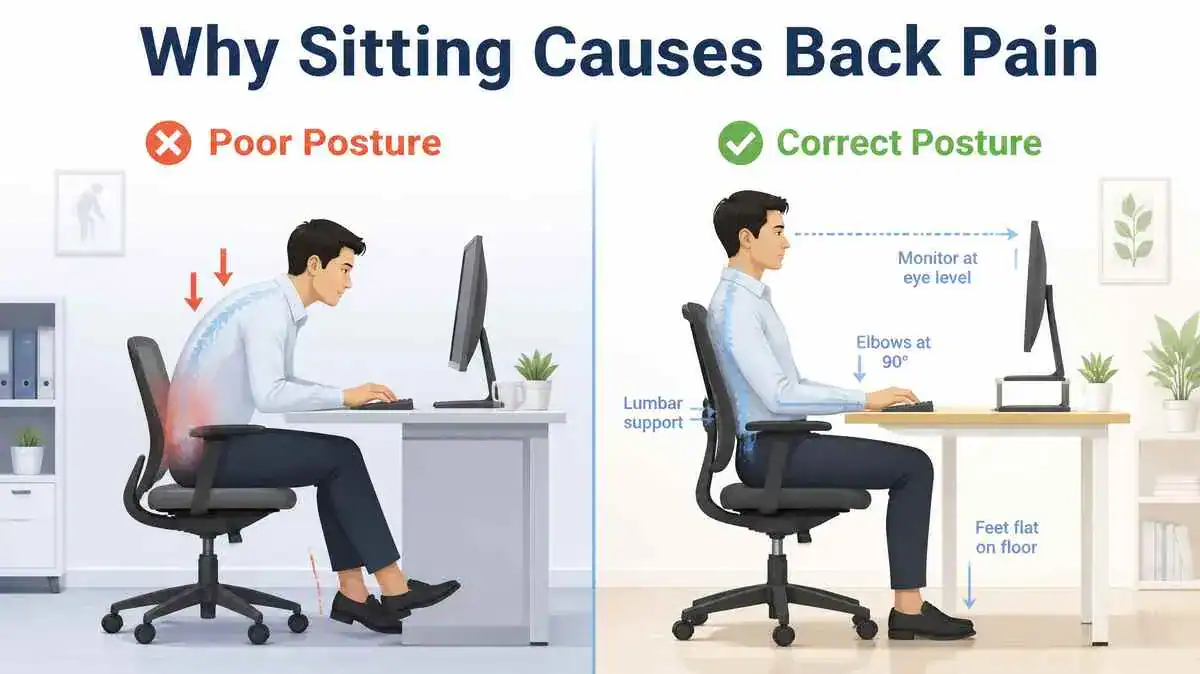
Poor sitting posture is another common contributor. Slouching, leaning forward, or sitting in a flexed position can reduce the natural curve of the lower back. This may increase spinal stress and contribute to muscle tension, lower-back discomfort, or back pain that feels worse while sitting.
Many of these posture habits are everyday sitting mistakes that cause back pain, and recognizing them early can help reduce unnecessary strain.
Chair support also plays an important role. Poor lumbar support, incorrect seat dimensions, or unsupported sitting can change pelvic position and reduce support for the lower back. Over time, this may contribute to back pain from sitting in a chair or lower back pain while sitting.
Poor posture often develops when the body loses proper support while sitting. Learn how poor posture can result in back pain and how changes in spinal alignment may increase stress on the muscles, joints, ligaments, and spinal discs.
Workstation setup matters as well. A monitor that is too low or too far away may encourage forward leaning. A poorly arranged desk can increase strain on the neck, shoulders, upper back, and lower back. This is one reason desk-job back pain and work-from-home back pain are so common.
In many cases, back pain from prolonged sitting is not caused by a single factor. Posture, muscle fatigue, spinal loading, chair support, and ergonomic setup often work together to influence how the back feels during sitting.
Why Sitting Can Make Existing Back Pain Worse
Sitting can make existing back pain worse because it may increase pressure on the lower spine and surrounding structures. For some people, symptoms become more noticeable during long periods of sitting than during standing or walking.
A static posture can also contribute to stiffness. When the body stays in the same position for too long, movement decreases and muscles work differently. This can lead to reduced sitting tolerance, a stiff lower back after sitting, or pain when standing up after sitting for a long time.
Posture often changes gradually during desk work, driving, or computer use. A person may start with good posture but slowly begin slouching, leaning toward a screen, or allowing the shoulders to round forward. This posture shift can increase muscle loading and make existing discomfort more noticeable.
Many of these work habits are also explained in desk job back pain, including how prolonged computer work, workstation setup, and static sitting can gradually contribute to back and neck discomfort.
Many people notice that symptoms improve after standing, walking, or changing position but return when sitting again. This pattern often suggests that posture, ergonomics, prolonged sitting, or sitting tolerance may be contributing factors.
Table of Contents
When to Worry
Mild Sitting Pain That Can Be Monitored
Not all sitting-related back pain is a sign of a serious problem. In many cases, symptoms are mild and follow a predictable pattern.
Pain that appears mainly after prolonged sitting, long desk sessions, studying, meetings, or driving is often related to sitting habits, posture, or reduced movement. The discomfort may feel like soreness, tightness, or mild lower back pain when sitting.
A common sign of mild sitting-related discomfort is that symptoms improve with movement. Standing up, walking, or changing position may reduce stiffness and make the back feel more comfortable.
Mild stiffness after sitting is also common. Some people notice a stiff lower back after sitting or brief pain when getting up from sitting. Symptoms often improve after a few minutes of movement.
Discomfort that clearly tracks with poor posture, long periods of sitting, or specific sitting situations can often be monitored while posture and ergonomic habits are reviewed.
When to Get Professional Evaluation
Professional evaluation may be helpful when symptoms continue despite efforts to improve sitting habits, posture, or workstation setup.
Pain that keeps returning, even after posture changes and regular movement, deserves closer attention. The same is true when back pain begins to affect work, driving, daily activities, or overall sitting tolerance.
Additional caution is appropriate when pain follows a specific event, such as a strain, fall, lifting injury, or other trauma. Injury-related pain should not automatically be assumed to be simple sitting discomfort.
Pain that radiates into the leg may also need evaluation. Unlike ordinary sitting soreness, radiating symptoms can suggest that more than posture or muscle fatigue may be involved.
Numbness, tingling, or unusual sensations should not be ignored. These symptoms may require assessment by a qualified healthcare professional, especially if they continue or become more noticeable over time.
Urgent Warning Signs
Some symptoms require prompt medical attention rather than waiting to see whether they improve.
Urgent warning signs include:
- Severe pain
- Rapidly worsening symptoms
- New weakness in the leg or foot
- New numbness
- Difficulty walking normally
- Difficulty standing normally
- Significant loss of normal movement control
These symptoms are different from typical stiffness or soreness after sitting. When they appear, professional medical evaluation is important to help determine the cause and appropriate next steps.
Mild vs Concerning Sitting Pain
| Symptom Pattern | What It May Suggest | What to Do |
| Mild stiffness after sitting | Temporary sitting-related discomfort | Move regularly and monitor symptoms |
| Pain improves with movement | Posture or sitting-tolerance factors may be involved | Continue movement and review sitting habits |
| Pain appears after long desk sessions | Prolonged sitting or ergonomic factors may contribute | Review workstation setup and sitting habits |
| Pain keeps returning despite adjustments | Symptoms may need further evaluation | Consider professional evaluation |
| Pain radiates into the leg | Possible nerve involvement | Seek professional evaluation |
| Numbness or tingling | Symptoms may be more than simple sitting soreness | Seek professional evaluation |
| Weakness or worsening symptoms | More concerning symptom pattern | Seek prompt medical attention |
| Pain after an injury, strain, or fall | Injury-related symptoms may be present | Professional evaluation is recommended |
Symptoms / Signs
Common Sitting-Related Back Pain Symptoms
People searching for what causes back pain when sitting often notice a similar group of symptoms. These symptoms can range from mild discomfort to more noticeable pain during long periods of sitting.
Common symptoms include:
- Lower back pain when sitting
- Low back pain when sitting
- Lower back discomfort when sitting
- Back discomfort when sitting
- Pain in the lower back after sitting
- A sore back from sitting
The discomfort may develop gradually during desk work, driving, studying, or other activities that involve prolonged sitting. Some people feel a dull ache, while others notice pressure, soreness, or reduced sitting comfort as time passes. Discomfort that is centered at the base of the spine may follow a more localized pattern, such as tailbone pain when sitting.
Many people also find that symptoms return when they sit again after standing or moving around.
Stiffness After Sitting
Stiffness is one of the most common signs of sitting-related back discomfort.
A person may notice a stiff lower back after sitting for a long time. The back can feel tight, less flexible, or uncomfortable when changing positions.
Common stiffness-related symptoms include:
- Stiff lower back after sitting
- Back stiffness after sitting
- Lower back stiff after sitting
- Pain when getting up from sitting
- Back pain when standing up from sitting
This pattern often appears after long meetings, desk work, driving, or other situations that limit movement. The stiffness may ease after walking or moving for a short period. During longer trips, adjusting lumbar support while driving may help improve lower-back contact as part of the overall driving position.
Posture Signs During Sitting
Symptoms are not always limited to pain. Sitting posture can also provide important clues.
Common posture signs include:
- Slouching in the chair
- Leaning forward toward a screen
- Rounded shoulders
- Forward-head posture
- Shifting weight to one side
- Visible posture collapse during long sitting sessions
These posture changes often develop gradually rather than immediately. A person may start sitting upright but slowly drift into positions that place more stress on the back, neck, and shoulders.
Frequent repositioning can also be a sign that the body is becoming uncomfortable during prolonged sitting.
Neck, Shoulder, and Upper-Back Symptoms
Sitting-related discomfort does not always stay in the lower back.
When posture changes during computer work or prolonged sitting, symptoms may spread into nearby areas of the body.
Common symptoms include:
- Neck tightness
- Shoulder tension
- Upper-back discomfort
- Upper back pain from sitting too long
- Mid back hurts when sitting
- Middle back pain while sitting
Some people notice muscle fatigue between the shoulder blades. Others develop neck tightness after leaning toward a screen for extended periods.
Symptoms That May Suggest Nerve Irritation
Some symptoms feel different from typical sitting soreness or stiffness.
Symptoms that may suggest nerve irritation include:
- Radiating pain that travels into the hip, buttock, or leg
- Numbness
- Tingling sensations
- Back tingling when sitting
- Weakness
- Sharper pain compared with normal sitting discomfort
These symptoms are generally more concerning than ordinary posture-related soreness. If numbness, weakness, radiating pain, or unusual tingling develops, professional evaluation may be appropriate, especially when symptoms continue or worsen.
Causes of What Causes Back Pain When Sitting
Prolonged Sitting
One of the most common answers to what causes back pain when sitting is prolonged sitting. Many people spend hours at a desk, in meetings, driving, or using a computer without changing position often.
When the body stays in one position for too long, movement decreases and muscles remain active for extended periods. Over time, this can lead to stiffness and reduced sitting comfort.
A common pattern looks like this:
Prolonged sitting → stiffness → reduced movement → pain when standing
This helps explain why some people experience back pain from sitting too much, lower back pain sitting all day, or discomfort when getting up after a long period in a chair.
Poor Sitting Posture
Poor sitting posture is another major contributor to sitting-related back pain.
Many people gradually begin slouching forward during work, studying, or screen use. A flexed sitting position can reduce the natural curve of the lower back and place more stress on spinal structures.
The posture-related pattern often follows this chain:
Poor posture → spinal stress → muscle tension → lower-back discomfort
This is why poor posture back pain and bad posture back pain are common complaints. Slouching forward, leaning toward a screen, and allowing the shoulders to round can all increase stress on the back during prolonged sitting.
Increased Pressure on the Lower Back
Sitting can increase pressure on the lower back compared with standing.
The lumbar spine and spinal discs help support body weight during sitting. When sitting continues for long periods, pressure on the lower back and surrounding structures may gradually increase.
Some people describe this feeling as lower back pressure when sitting, pressure on the spine when sitting, or a sense that the lower spine becomes compressed after remaining seated for too long.
This increased loading does not automatically mean an injury is present. However, it can contribute to discomfort, especially when combined with poor posture or limited movement.
Weak or Missing Lumbar Support
The lower back naturally has a gentle inward curve. Good lumbar support helps maintain this position while sitting.
When support is missing, the pelvis may gradually shift position and the lower back may lose some of its natural support. This can make sitting feel less comfortable over time.
The support-related pattern often follows this chain:
Unsupported sitting → pelvic tilt changes → reduced lumbar support → sitting discomfort
Some people use built-in lumbar support, a lumbar roll, or even a rolled-up towel to provide additional support. Proper fit and placement are important because support that does not match the body may be less effective.
Chair Problems
Sometimes the problem is not sitting itself but the chair being used.
A chair that does not fit the body well can make it harder to maintain a comfortable sitting position throughout the day. This may contribute to back pain when sitting in a chair, especially during long work sessions.
Common chair-related issues include:
- Seat height that is too high or too low
- Seat depth that does not properly support the thighs
- Poor back support
- Limited adjustability
- Sitting on the front edge of the chair for long periods
Perching on the front edge often reduces back support and may increase muscle effort to stay upright. Over time, this can contribute to discomfort and fatigue.
Desk and Workstation Setup
Even a supportive chair may not fully compensate for a poor workstation setup.
Desk job back pain and work-from-home back pain often develop when screens, keyboards, or work materials encourage awkward postures. At home, home office ergonomics can also be affected by fixed furniture, limited workspace, or equipment that was not designed for long computer work.
Common workstation factors include:
- Monitor height that is too low
- A monitor positioned too far away
- Desk height that promotes awkward arm positions
- Excessive reaching for a keyboard, mouse, or frequently used items
A common pattern looks like this:
Low or distant monitor → forward leaning → neck strain → upper-back tension
This helps explain why discomfort may develop not only in the lower back but also in the neck, shoulders, and upper back during computer use.
Muscle Fatigue and Tightness
Muscles help support posture during sitting. When they remain active for long periods without enough movement, fatigue can develop.
Many people notice that their posture gradually changes later in the day as muscles become tired. Slouching, shifting position frequently, or struggling to get comfortable can all be signs of muscle fatigue.
Common contributing factors include:
- Muscle fatigue
- Muscle tension
- Muscle strain
- Tight muscles
- Tight hip flexors
- Reduced tolerance for static posture
- Weak core muscles
Long periods of sitting may also contribute to tightness around the hips and lower body. This can make it harder to maintain comfortable posture and may increase stress on the lower back. Some people may also notice hip pain when sitting, especially when discomfort builds during longer periods in a chair.
Unlike posture-related stress, muscle fatigue develops because muscles become tired from supporting the body in one position for too long.
Spinal or Nerve-Related Conditions
In some cases, sitting discomfort may be influenced by an underlying spinal or nerve-related condition.
Examples include:
- Herniated disc
- Degenerative disc disease
- Spinal stenosis
- Sciatica
- Nerve compression
These conditions can sometimes make sitting less comfortable and may produce symptoms that differ from ordinary sitting soreness.
Possible symptoms include:
- Radiating pain into the leg
- Numbness
- Tingling
- Weakness
- Sharper pain than typical sitting discomfort
The presence of these symptoms does not automatically mean a specific condition is present. However, persistent symptoms, worsening symptoms, or symptoms that extend into the leg should be evaluated by a qualified healthcare professional.
The table below summarizes the most common causes of sitting-related back pain, the signs they may produce, and practical areas to review.
Common Causes of Back Pain When Sitting
| Cause | What Happens | Common Signs | What May Help |
| Prolonged sitting | Reduced movement and increased stiffness | Stiffness after sitting, pain when standing | Regular movement breaks |
| Poor posture | Increased stress on muscles and spinal structures | Slouching, rounded shoulders, lower-back discomfort | Improved sitting posture |
| Limited lumbar support | Reduced support for the lower back | Sitting discomfort, fatigue during sitting | Proper lumbar support |
| Chair fit problems | Poor body positioning during sitting | Pressure points, shifting position frequently | Better chair adjustment |
| Workstation issues | Forward leaning and awkward posture | Neck tightness, shoulder tension, upper-back discomfort | Improved desk setup |
| Muscle fatigue | Reduced tolerance for static posture | Tight muscles, soreness later in the day | Movement and position changes |
| Spinal or nerve-related conditions | Increased sensitivity during sitting | Radiating pain, numbness, tingling | Professional evaluation when needed |
What It May Indicate
It May Be a Posture and Sitting Tolerance Problem
Many cases of sitting-related back discomfort appear to be linked to posture habits and sitting tolerance rather than a serious underlying problem.
Common patterns include:
- Pain improves with movement
- Pain returns after sitting again
- Discomfort increases during long desk sessions
- Symptoms are worse after prolonged sitting
This pattern suggests that the body may be reacting to sustained positions, reduced movement, or posture-related stress during sitting.
It May Be an Ergonomic Setup Problem
Sometimes symptoms are closely connected to a specific environment.
Signs that ergonomics may be contributing include:
- Pain occurs mainly in one chair
- Symptoms worsen during a work-from-home setup
- Discomfort develops after desk work
- Pain appears during extended computer use
When symptoms consistently occur in the same workspace, workstation design and sitting support may be contributing factors worth reviewing.
It May Be More Than Simple Sitting Soreness
Not all sitting-related pain follows a simple posture or ergonomic pattern.
Symptoms that deserve additional attention include:
- Persistent pain
- Numbness
- Radiating leg symptoms
- Weakness
- Pain after an injury
These symptoms may suggest that factors beyond ordinary sitting discomfort are involved. Professional evaluation may help determine the cause when symptoms continue or interfere with normal activities.
Sitting Pain Can Have More Than One Cause
Back pain during sitting is often multifactorial.
Several factors can contribute at the same time, including:
- Posture problems
- Muscle fatigue
- Ergonomic issues
- Reduced movement
- Spinal conditions
For example, a person may have a poorly adjusted workstation, sit for long periods, develop muscle fatigue, and occasionally slump forward during the day. Together, these factors may create more discomfort than any single factor alone.
Understanding that sitting pain can have multiple contributing factors often helps explain why symptoms vary from person to person.
What to Do
Change Position More Often
One of the simplest strategies is to avoid staying in the same position for hours at a time.
Regular movement helps reduce stiffness and gives muscles an opportunity to relax and change workload.
Helpful habits include:
- Taking movement breaks
- Standing periodically
- Walking briefly at intervals
- Changing sitting positions throughout the day
- Avoiding uninterrupted sitting for long periods
Even short periods of movement can help reduce the feeling of stiffness that often develops during prolonged sitting.
Improve Basic Sitting Posture
Good sitting posture does not require sitting perfectly rigid all day. Readers looking for practical posture instructions can follow this guide on how to sit properly in a chair to avoid back pain.
Instead, the goal is to maintain a comfortable, supported position.
Basic posture principles include:
For a complete step-by-step guide, see the best sitting position for back pain, including proper spinal alignment, chair positioning, and posture habits for everyday comfort.
- Keeping both feet flat on the floor
- Supporting the knees comfortably
- Keeping the back supported
- Avoiding excessive forward leaning
- Maintaining a neutral posture when possible
Small posture adjustments made consistently throughout the day are often more realistic than trying to maintain a perfect position at all times.
Reduce Lower Back Pressure While Sitting
People often ask how to sit without back pain or how to sit with lower back pain. While there is no single position that works for everyone, a few simple adjustments may help reduce stress on the lower back.
Helpful sitting habits include:
- Keeping the back supported
- Sitting fully in the chair rather than on the edge
- Keeping both feet supported
- Avoiding prolonged slouching
- Changing positions regularly
The goal is not to hold one perfect posture all day. Instead, it is to reduce prolonged stress on the same tissues and maintain comfortable alignment during sitting.
Watch How Symptoms Respond
How symptoms behave can provide useful information.
Pain that improves with movement and returns during long periods of sitting may suggest posture-related, ergonomic, or sitting-tolerance factors.
In contrast, symptoms that continue to worsen, spread into other areas, or become more intense over time deserve closer attention.
Examples include:
- Pain that spreads into the leg
- Increasing numbness or tingling
- Symptoms that become more frequent
- Reduced ability to sit comfortably
Monitoring symptom patterns can help identify whether discomfort appears linked to sitting habits or whether further evaluation may be appropriate.
Seek Help When Needed
Professional medical evaluation may be appropriate when symptoms do not improve or become more concerning.
Consider seeking evaluation when:
- Pain persists despite posture or ergonomic changes
- Symptoms continue to worsen
- Pain radiates into the leg
- Numbness or tingling develops
- Weakness is present
- Symptoms follow an injury, strain, or fall
Early evaluation can help identify contributing factors and guide appropriate next steps. This article is educational only and is not intended to diagnose any medical condition.
Ergonomic & Support Options
Chair Support
A supportive chair can make prolonged sitting more comfortable and may help reduce unnecessary strain on the back.
Helpful chair features include:
- Back support that supports the spine comfortably
- Seat height that allows the feet to stay flat
- Seat depth that supports the thighs without forcing posture collapse
- Adjustable features that allow a better fit
It is also helpful to avoid sitting on the front edge of the chair for long periods, as this often reduces back support and encourages forward leaning.
Lumbar Support
Lumbar support is designed to help maintain the natural curve of the lower back during sitting. Understanding what lumbar support is and how it works can help explain why this lower-back support matters during sitting.
Proper fit and placement are important. Support that sits too high, too low, or feels excessive may be less comfortable.
Examples of lumbar support options include:
- Built-in lumbar support
- Adjustable lumbar systems
- A lumbar roll
- A rolled towel used as temporary support
The goal is gentle support rather than forcing the back into an uncomfortable position.
When lumbar support hurts the back, the discomfort may relate specifically to how the support interacts with the person rather than to sitting alone.
Desk Setup
A well-arranged workstation can help reduce unnecessary strain during computer work.
Key factors include:
- Monitor height
- Desk height
- Keyboard placement
- Reach distance
Keeping work close enough to avoid hunching or excessive leaning can help reduce stress on the neck, shoulders, and upper back.
Small workstation adjustments are often easier to maintain than constantly trying to correct posture through muscle effort alone.
Movement Breaks
Movement remains one of the most important habits for people who spend long hours sitting.
Helpful strategies include:
- Standing periodically
- Walking briefly
- Changing position regularly
- Taking short movement breaks throughout the day
These habits can be useful during desk work, studying, driving, travel, gaming, and other activities that involve prolonged sitting. People who notice back pain from gaming may also need to consider chair fit, screen position, control reach, and how long they stay in one position.
Sitting Position Support
Many people search for the best sitting position for lower back pain or the best sitting position for back pain.
While individual needs vary, most people benefit from:
- A supported back
- Feet resting comfortably
- Reduced forward leaning
- Regular position changes
- Appropriate workstation setup
More detailed sitting-position guidance can be explored in dedicated posture and sitting-comfort resources.
FAQ
What causes back pain when sitting?
Back pain when sitting is commonly associated with prolonged sitting, poor posture, reduced movement, muscle fatigue, inadequate support, or ergonomic problems. In some cases, spinal or nerve-related conditions may also contribute.
Why does sitting hurt my lower back?
Sitting can increase stress on the lower back, especially when posture gradually changes, movement is limited, or support is inadequate. Muscle fatigue and prolonged pressure on the lumbar area may also contribute to discomfort.
Can sitting too long cause back pain?
Yes. Sitting for extended periods can contribute to stiffness, muscle fatigue, reduced movement, and increased discomfort. Many people notice symptoms become more noticeable after long desk sessions, driving, or prolonged screen time.
Can bad posture cause back pain?
Poor posture can contribute to back pain by increasing stress on muscles and spinal structures. Slouching, leaning forward, and allowing the shoulders to round may increase discomfort during prolonged sitting.
Why does my back hurt when I get up from sitting?
Many people experience stiffness after remaining seated for a long time. Reduced movement during sitting may make the back feel tight or uncomfortable when standing up and beginning to move again.
What causes back pain only when sitting?
Pain that occurs mainly while sitting is often associated with prolonged sitting, poor posture, inadequate lumbar support, chair fit problems, or workstation issues. In some cases, underlying spinal conditions may make sitting less comfortable.
How do I stop my back from hurting while sitting?
Back pain while sitting may improve by changing positions regularly, taking movement breaks, using proper back support, keeping both feet supported, and improving workstation ergonomics. Avoid sitting for long periods without moving, as regular movement can help reduce stiffness and discomfort.
How can someone tell if back pain is serious?
Back pain may require professional evaluation if it is persistent, worsening, radiates into the leg, causes numbness or tingling, leads to weakness, affects walking, or develops after an injury. These symptoms may be more concerning than temporary sitting-related stiffness or mild discomfort and should not be ignored.
Why does my lower back hurt when I sit?
Lower back pain during sitting may be related to prolonged sitting, posture habits, workstation setup, muscle tension, or reduced support. The exact cause can vary from person to person.
What kind of back pain gets worse with sitting?
Several types of back pain may feel worse during sitting. Common examples include posture-related discomfort, prolonged sitting strain, muscle tension, and some spinal or nerve-related conditions. Symptoms that worsen during sitting but improve after movement are often linked to sitting habits, posture, or reduced movement tolerance.
How can someone sit with lower back pain?
A supported sitting position is often more comfortable than unsupported sitting.
Helpful habits include:
- Sitting fully back in the chair
- Supporting the lower back when needed
- Keeping the feet flat or supported
- Avoiding excessive forward leaning
- Changing positions regularly
Comfort and support are generally more sustainable than remaining in a rigid position for long periods.
Is sitting bad for lower back pain?
Not necessarily. Sitting itself is not automatically harmful. However, prolonged sitting, limited movement, poor posture, and inadequate support may contribute to discomfort in some people.
Many individuals tolerate sitting well when posture, support, workstation setup, and movement habits are appropriate.
Sources & References
The information in this article was researched using educational, ergonomic, orthopedic, and healthcare resources, including:
- Cambridge University Hospitals NHS – Seating and Ergonomics
- Hospital for Special Surgery (HSS) – Back Pain When Sitting
- Cary Orthopaedics – Workplace Ergonomics, Posture and Back Pain
- Harvard Health Publishing – Don’t Take Back Pain Sitting Down
- Orthopedic Associates of New Jersey – Back Pain from Sitting
- Better Health Channel – Posture
- OWC Health – Poor Posture: Symptoms, Causes, Effects and How to Improve
- Brown University Health – Posture and How It Affects Your Health
Soft CTA
Learn More About Sitting Comfort
Understanding what causes back pain when sitting is often the first step toward improving sitting comfort and reducing everyday discomfort.
Readers who want to learn more can explore Backrested guides on:
- Sitting posture
- Lumbar support
- Ergonomic desk setup
- Chair comfort
- Sitting habits and movement strategies
These resources provide additional educational information to help people better understand how posture, support, movement, and workstation design can influence sitting comfort over time.
Update Note
Last Reviewed / Updated
Last reviewed and updated: June 5, 2026
This article is reviewed periodically to improve clarity, accuracy, usefulness, and alignment with current ergonomic and educational best practices related to sitting comfort, posture, and back pain awareness.
2 thoughts on “Why Sitting Causes Back Pain: Causes, Symptoms, and How to Find Relief”