
TL;DR
Key Takeaways
- Tailbone pain when sitting often happens when prolonged sitting puts repeated or direct pressure on the coccyx, the small bone at the base of the spine.
- Sitting for too long, leaning backward, a poor pelvic position, and hard or poorly cushioned seats can increase pressure on the tailbone.
- Changing position, taking regular movement breaks, and using a cushion with a coccyx cutout may help reduce continuous pressure while sitting.
- Pain that follows a fall, keeps getting worse, limits normal activities, or occurs with numbness, weakness, or bowel or bladder changes should be evaluated by a healthcare professional.
Quick Answer
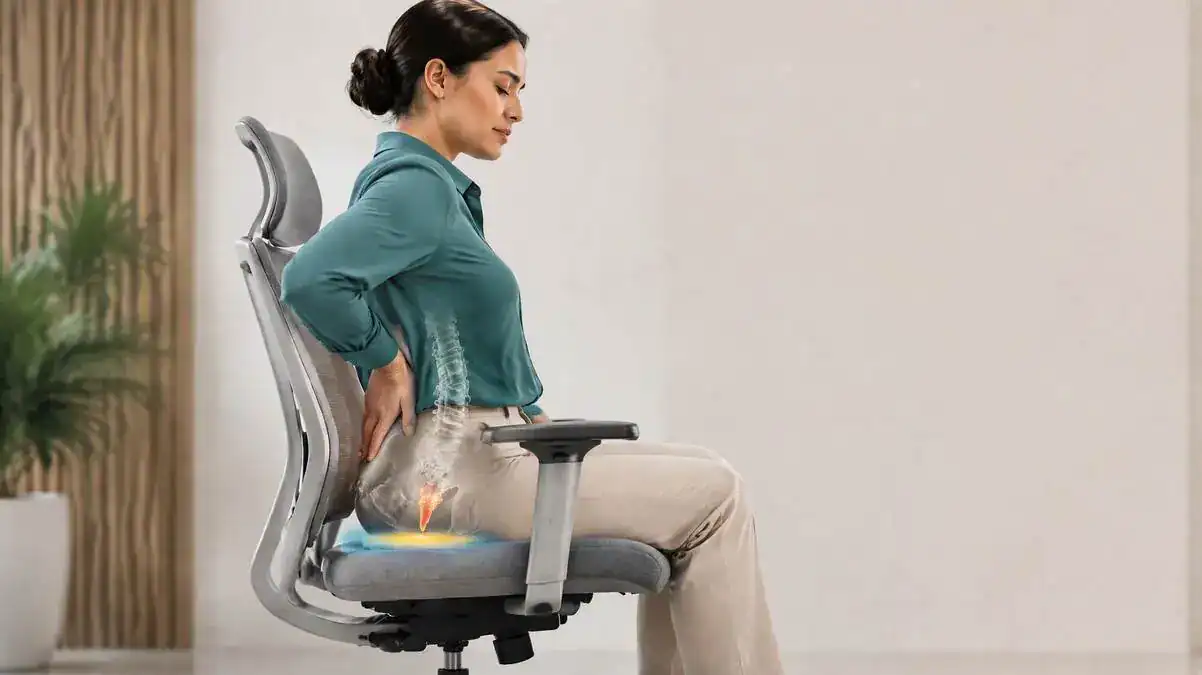
Tailbone pain when sitting is pain or soreness around the coccyx, the small bone at the base of the spine. Sitting can make it worse because the seat may place direct pressure on this area, especially during long periods of sitting.
Leaning backward can increase this pressure. A backward pelvic tilt can also shift more body weight toward the tailbone instead of the sitting bones. Hard or poorly cushioned seats may add even more pressure.
For mild discomfort, changing position, standing and moving regularly, and using a coccyx cutout cushion may help reduce direct pressure. If the pain persists, gets worse, follows an injury, or interferes with normal daily activities, a healthcare professional should evaluate it.
Table of Contents
When to Worry
Tailbone pain when sitting is often linked to pressure or irritation from prolonged sitting. However, some patterns need medical attention, especially when the pain follows an injury, keeps getting worse, or appears with other unusual symptoms.
Pain After a Fall or Direct Injury
A fall backward onto a hard surface can bruise, fracture, or dislocate the coccyx. Tailbone pain that begins after a fall or another direct injury should be evaluated, especially if it limits normal sitting or movement.
Numbness, Weakness, or Bowel and Bladder Changes
Numbness, tingling, or weakness in one or both legs needs prompt medical attention. Changes in bowel or bladder control are also warning signs that should not be treated as ordinary sitting-related discomfort.
These symptoms may point to nerve involvement or another underlying problem that needs timely evaluation.
Pain That Keeps Getting Worse Instead of Improving
Mild soreness linked to sitting may ease after standing, changing position, or reducing pressure on the tailbone. Pain that continues to get worse instead of improving should be professionally evaluated.
A sudden increase in pain, swelling, skin changes, or fluid drainage near the tailbone also needs prompt medical attention.
Severe Pain That Makes Sitting Almost Impossible
Severe tailbone pain that makes sitting difficult should not be ignored. Pain that interferes with normal movement or daily activities is another reason to seek professional evaluation.
This is different from mild pressure-related soreness that improves after standing, shifting position, or using cushioning.
Pain That Lasts for Several Weeks
Tailbone pain that lasts for several weeks or keeps returning deserves medical evaluation. Pain that continues beyond about eight weeks is another reason to seek further clinical assessment.
Persistent pain should not automatically be blamed on sitting posture or chair pressure, especially when it does not improve with ergonomic changes.
Fever, Unexplained Weight Loss, or Other Unusual Symptoms
Fever with tailbone pain needs medical attention because infection is one of the less common possible causes of pain in this area. Skin changes, swelling, or drainage near the tailbone are other unusual signs that need prompt evaluation.
Ongoing tailbone pain that appears with unusual symptoms or cannot be explained by normal sitting pressure should be discussed with a healthcare professional.
Signs It Is Time to Seek Medical Evaluation
Medical evaluation is important when tailbone pain follows an injury, keeps getting worse, lasts longer than expected, or appears with other concerning symptoms.
- Pain that begins after a fall or direct injury
- Numbness or weakness in one or both legs
- Bowel or bladder control changes
- Pain that lasts for several weeks or keeps returning
- Severe pain that limits normal sitting, movement, or daily activities
- Symptoms and Signs of Tailbone Pain When Sitting
Tailbone pain when sitting can feel different from person to person. The discomfort usually appears around the coccyx at the base of the spine and may change with sitting time, pressure, or movement.
A Sharp or Dull Ache at the Base of the Spine
Coccyx pain when sitting may feel like a dull ache or a sharper pain at the base of the spine. The discomfort is usually centered around the tailbone rather than spread evenly across the lower back.
The feeling can also change. A mild ache during sitting may become sharper when more pressure or movement reaches the painful area.
Pain That Gets Worse the Longer Someone Sits
Tailbone pain from sitting too long often becomes more noticeable as sitting continues. Staying in the same position for longer periods can increase pressure and stiffness around the coccyx.
This pattern may leave the tailbone feeling sore after sitting, even when the discomfort was mild at first.
Tenderness When Pressing on the Tailbone
Localized tenderness is another common sign. The area around the coccyx may hurt or feel sensitive when touched or pressed.
This tenderness can occur along with aching or sharp pain, but the exact feeling may vary from person to person.
Pain When Sitting Down or Standing Up
Tailbone pain can become sharper during the transition between sitting and standing. Some people notice a strong pain spike when getting up after sitting for a while.
This sit-to-stand pattern is different from discomfort that develops while someone remains seated.
Feeling Pressure Directly on the Tailbone
Some people feel as if their body weight is pressing directly onto the tailbone. The discomfort may become more noticeable when the coccyx stays in contact with a hard or unpadded seat.
A person may sit farther forward, shift weight often, or sit on one buttock to avoid direct tailbone contact. These behaviors can be signs that sitting pressure is uncomfortable.
Pain That Improves After Changing Position
Pain that eases after standing, shifting position, or reducing direct pressure can point to a pressure-sensitive sitting pattern. The relief may be temporary, and the discomfort may return after sitting again.
Noticing these changes can help show how strongly sitting position and pressure affect the discomfort.
What Causes Tailbone Pain When Sitting?
Tailbone pain when sitting can have more than one cause. Common sitting-related causes include prolonged pressure on the coccyx, a backward pelvic position, hard or poorly supportive seats, muscle overload, and an earlier injury. Body shape and natural cushioning can also affect how much pressure reaches the tailbone.
The table below shows some common sitting-related factors and how each one may contribute to tailbone discomfort.
| Cause | How It May Contribute |
| Prolonged sitting | Keeps repeated pressure on the coccyx |
| Poor sitting posture | Can shift body weight toward the tailbone |
| Hard or unsupportive chair | Can concentrate pressure around the coccyx |
| Tight or overloaded muscles | May contribute to pain around the tailbone |
| Previous injury | Can leave the area sensitive to sitting pressure |
Prolonged Sitting Increases Pressure on the Coccyx
Prolonged sitting keeps the coccyx under repeated pressure. This pressure can be greater on hard, narrow, or unpadded surfaces and may irritate the coccyx and nearby tissues over time.
This helps explain why tailbone pain from sitting too long may develop even without a single obvious injury. Longer sitting time and greater seat pressure can work together to increase irritation.
Poor Sitting Posture Shifts Weight Onto the Tailbone
Poor sitting posture can increase tailbone pressure when the pelvis rolls backward. This movement shifts body weight away from the sitting bones and toward the coccyx.
Leaning backward can increase this effect. What matters most is where the body carries its weight while sitting, not simply whether the posture looks “good” or “bad.”
Hard or Unsupportive Chairs Create Concentrated Pressure
A hard or poorly cushioned chair can place more direct pressure on the tailbone. Narrow seats may also increase pressure because they provide less room for the body to spread its weight comfortably.
Chair fit matters too. Seats that are too low, too soft, or poorly supportive can change pelvic position and increase coccyx contact with the seat.
Sitting Too Long Without Movement Irritates Nearby Tissues
Sitting continuously does more than keep pressure on the coccyx. Long periods without movement can also contribute to muscle and joint stiffness around the area.
Repeated pressure may create small amounts of ongoing strain or microtrauma around the coccygeal joints. This can help explain why soreness sometimes builds gradually during repeated or extended sitting.
Tight Muscles Around the Tailbone May Contribute
Muscles around the pelvis and buttocks can also contribute to tailbone-area discomfort. Long periods of sitting may overload muscles such as the gluteals, piriformis, and coccygeus.
Tight or overloaded muscles can create pain that spreads toward the tailbone. This discomfort may feel similar to pain coming directly from the coccyx.
A Previous Injury Can Become More Noticeable While Sitting
A previous tailbone injury may leave the area more sensitive to pressure. A fall onto a hard surface can bruise, fracture, or dislocate the coccyx, and sitting may put pressure on an already sensitive area.
A past injury does not always explain current pain, but it can be an important clue when discomfort becomes more noticeable during sitting.
Body Shape and Weight Distribution Affect Coccyx Pressure
Body weight can change how pressure reaches the coccyx. Higher body weight may increase tailbone pressure and can also tilt the coccyx farther backward.
Very low body weight can create a different problem. Less natural padding around the area may allow more friction and pressure between the coccyx, nearby tissues, and the seat.
Some People Develop Tailbone Pain Without a Clear Injury
Tailbone pain without injury does not always have one obvious explanation. Prolonged sitting, pelvic position, muscle overload, coccyx shape, joint movement, and seat pressure can all contribute even when no fall or trauma occurred.
In some cases, no clear cause is found even after evaluation. These cases may be described as idiopathic, which simply means the exact cause remains unknown.
What It May Indicate
Tailbone pain when sitting can follow several different patterns. Pain that changes with sitting time, posture, pressure, or movement may point toward irritation or overload around the coccyx. Persistent or worsening pain may need professional evaluation.
Some pain patterns can provide clues about what may be contributing to the discomfort, although they cannot identify the cause on their own.
| Pain Pattern | What It May Suggest |
| Pain mainly while sitting | Pressure-related irritation |
| Pain that builds during long sitting | Repeated pressure or tissue overload |
| Pain when standing up | Coccyx sensitivity or movement-related pain |
| Constant or severe pain | May need medical evaluation |
Temporary Pressure Irritation After Long Sitting
Pain that appears after sitting for a long time and eases after standing or changing position may reflect temporary pressure-related irritation. Prolonged sitting keeps repeated pressure on the coccyx and can irritate the joint and nearby tissues.
This pattern may be more consistent with sitting-related pressure when the discomfort changes with position rather than staying the same all the time.
Posture-Related Overload Rather Than a Serious Injury
Pain that becomes worse when leaning backward but changes with posture may suggest that seated weight is being carried too far toward the tailbone.
A backward pelvic tilt can shift weight away from the sitting bones and toward the coccyx.
When soreness improves with movement or a change in position, sitting pressure or posture may be contributing. However, improvement with position changes cannot rule out an injury or another cause.
Muscle Tension Around the Pelvis and Coccyx
Discomfort around the tailbone may sometimes come from nearby muscles rather than directly from the coccyx joint. Prolonged sitting can overload the gluteal muscles, piriformis, and coccygeus. Tight pelvic muscles may also contribute to discomfort after sitting.
Muscle-related pain can spread toward the tailbone area, making it difficult to tell where the discomfort starts based on location alone.
Ongoing Inflammation of the Tailbone Area
Ongoing tailbone pain can involve continued irritation around the coccyx, especially when repeated pressure or small, repeated strain affects the area over time.
Persistent soreness does not always mean inflammation is present. If the pain keeps returning, gets worse, or does not improve when sitting pressure changes, a healthcare professional can help identify what may be causing it.
A Previous Tailbone Injury Becoming Sensitive Again
Pain that returns during sitting may sometimes relate to an earlier coccyx injury. A past fall can bruise, fracture, or dislocate the coccyx, which may leave the area sensitive to pressure or movement.
A history of injury can be a useful clue, but it does not confirm the reason for current pain. Persistent, unexplained, or worsening pain deserves professional evaluation.
Why Sitting Pain Is Not Always Coccydynia
Coccydynia is the clinical term for pain in the coccyx or tailbone region. However, pain felt near the tailbone while sitting can involve direct pressure, pelvic position, muscle overload, joint movement, injury, or referred pain.
Pain near the coccyx does not identify its source by itself. How the pain responds to movement, posture, and sitting pressure can provide useful clues, but a healthcare professional may need to evaluate persistent or unexplained symptoms.
What to Do
For tailbone pain when sitting, early steps can focus on reducing continuous pressure and noticing what changes the discomfort. Small changes in position and sitting time may help with pressure-related soreness, while persistent or worsening pain needs further attention.
Change Sitting Position Before Pain Builds
Staying in one position for too long can keep pressure on the same area. Changing position regularly can reduce continuous pressure on the coccyx instead of waiting until the discomfort becomes strong.
A comfortable sitting position can change throughout the day, so regular shifts in position are more useful than staying fixed in one posture.
Stand and Move Regularly Throughout the Day
Regular standing and movement breaks can interrupt long periods of sitting. During prolonged sitting, taking a standing or movement break about every 45–60 minutes can help interrupt continuous pressure.
Standing removes seated pressure for a while. Movement also gives the person a chance to change position before stiffness and pressure continue to build.
Reduce Pressure by Leaning Slightly Forward
Leaning slightly forward may move some pressure away from the tailbone. This can be useful when leaning backward makes coccyx pain when sitting more noticeable.
The change does not need to be extreme. A small shift may be enough to reduce direct coccyx pressure without forcing the body into a rigid position.
Avoid Sitting Continuously on Hard Surfaces
Hard or unpadded surfaces can make tailbone discomfort more noticeable because they increase direct pressure against the area.
When a hard seat clearly makes the pain worse, reducing the amount of continuous time spent on that surface may help limit repeated pressure.
Use Heat or Cold Only if It Helps Comfort
Heat or cold may provide temporary comfort when the tailbone feels sore. Neither option shows or corrects the underlying cause of the pain.
Temporary relief also does not explain why the tailbone hurts. Persistent or worsening discomfort still needs appropriate evaluation.
Track When the Pain Happens to Identify Patterns
The way pain responds to sitting can provide useful clues. A person can notice whether discomfort gets worse after prolonged sitting, on hard surfaces, while leaning backward, or in certain seated positions.
It can also help to notice what happens after standing or changing position. These details may be useful if the pain later needs to be discussed with a healthcare professional.
Know When Professional Evaluation Is Appropriate
Professional evaluation is appropriate when tailbone pain does not improve after a few days, significantly limits normal sitting or movement, follows a fall or sports injury, keeps returning, or becomes chronic. Pain that continues beyond about 8 weeks also deserves further clinical assessment.
Prompt medical attention is recommended when pain occurs with leg tingling, numbness or weakness, sudden swelling or worsening pain, skin changes or drainage near the tailbone, prolonged constipation, or bowel or bladder control changes.
Everyday Habits That May Reduce Tailbone Pressure
For everyday sitting, a few simple habits can help reduce how long pressure stays on the tailbone:
- Change position regularly during long sitting periods.
- Take a standing or movement break about every 45–60 minutes.
- Keep both feet supported.
- Keep more seated weight over the sitting bones instead of rolling backward onto the tailbone.
- Avoid leaning heavily backward for long periods.
Ergonomic and Support Options
For tailbone pain when sitting, ergonomic support can help manage how body weight and pressure reach the coccyx. Sitting position, chair fit, cushioning, and lower-body support can all affect pressure, but the most useful changes depend on what makes the discomfort better or worse.
How to Sit With Tailbone Pain
A more neutral pelvic position can help keep body weight over the sitting bones instead of rolling backward onto the coccyx. The sitting bones, also called the ischial tuberosities, carry much of the body’s seated load.
Weight should stay as even as practical across the sitting bones. Leaning heavily backward can tilt the pelvis back and shift more pressure toward the tailbone.
A comfortable position should avoid excessive backward pelvic roll while still allowing regular shifts in position. This can help prevent continuous pressure from staying on the coccyx.
Choosing a Chair That Reduces Tailbone Pressure
A chair should provide enough cushioning to limit hard bone-on-seat pressure. Hard or poorly padded seats can make coccyx discomfort more noticeable, especially during longer sitting periods.
Seat firmness matters too. A very hard surface can concentrate pressure, while excessive softness may contribute to poor support and unwanted pelvic positioning. A suitable chair should help spread seated pressure rather than concentrate it around the tailbone.
Chair height, seat depth, cushioning, and body position can all influence how pressure is distributed. When discomfort is centered around the hips instead, hip pain when sitting may involve some of the same chair-fit and pressure factors, along with other possible causes.
When a Coccyx Cushion May Help
A coccyx cutout cushion is designed to reduce direct contact and pressure around the tailbone. It may be useful when contact with the seat clearly makes discomfort worse.
A wedge cushion works differently. It changes seated pressure distribution and may shift some pressure away from the coccyx.
A cushion may reduce pressure, but it may not address other factors that contribute to discomfort, such as pelvic position, chair fit, prolonged sitting, muscle tension, joint problems, or injury.
Why Lumbar Support Is Different From Tailbone Support
Lumbar support and tailbone support serve different purposes. Lumbar support works behind the lower back and may help maintain the natural lumbar curve and reduce unwanted pelvic tilt.
A coccyx cushion works under the pelvis. Its main purpose is to change seat pressure distribution and reduce direct contact around the tailbone.
One supports the lower back and may influence pelvic positioning, while the other mainly reduces pressure where the pelvis meets the seat.
| Lumbar Support | Coccyx Cushion |
| Supports the lower-back curve | Reduces direct pressure around the tailbone |
| May help with pelvic positioning | Changes seated pressure distribution |
| Works behind the lower back | Works under the pelvis |
Small Workstation Changes That Reduce Sitting Pressure
Chair height can affect pelvic position and nearby muscle loading. A chair that is too low may create a tight angle between the thighs and torso, making a comfortable sitting position harder to maintain.
Foot support can also matter. If the feet do not rest comfortably at a suitable chair height, a footrest may provide lower-body support without forcing the chair too low.
The workstation should also allow regular position changes instead of keeping the person fixed in one place. Chair height, seat depth, pelvic position, foot support, sitting time, and opportunities to stand or move can all affect seated pressure.
Small workstation changes may make sitting more comfortable. If symptoms continue despite these changes, other causes may need to be considered.
FAQ
Why Does My Tailbone Hurt When I Sit?
Tailbone pain when sitting often happens because sitting places direct pressure on the coccyx. Prolonged sitting, hard surfaces, a backward pelvic tilt, and poor chair support can increase that pressure. Muscle overload, joint irritation, an earlier injury, or other less common causes may also contribute.
Can Bad Posture Cause Tailbone Pain?
Yes. A backward-leaning sitting posture can increase pressure on the tailbone. When the pelvis rolls backward, body weight shifts away from the sitting bones and toward the coccyx. Posture is not always the only factor. Chair fit, sitting time, cushioning, and other causes may contribute at the same time.
Why Does My Tailbone Hurt After Sitting for a Long Time?
Prolonged sitting places sustained pressure on the coccyx. The effect can become stronger on hard or unsupportive surfaces, where repeated pressure may irritate the joint and nearby tissues. This is why tailbone pain from sitting too long may become more noticeable as a sitting session continues.
How Should I Sit With Tailbone Pain?
A person with tailbone discomfort may find it more comfortable to keep the pelvis from rolling far backward and allow more weight to rest over the sitting bones. Leaning slightly forward may also reduce direct pressure on the coccyx. Regular position changes can help prevent pressure from staying on the same area for too long.
How Long Does Tailbone Pain Usually Last?
How long tailbone pain lasts depends on its cause and severity. Mild sitting-related soreness may fade within days. Pain that does not improve after a few days, limits sitting or movement, lasts beyond about eight weeks, or keeps returning should be professionally evaluated.
When Should Someone See a Doctor for Tailbone Pain?
Tailbone pain should be evaluated if it does not improve, limits sitting or movement, follows an injury, or keeps returning. Seek prompt medical attention for numbness, weakness, swelling, skin changes, or bowel or bladder control changes.
Why Does It Hurt to Sit Directly on My Tailbone?
Direct contact with the tailbone can concentrate pressure around the coccyx. Hard or unpadded seating can make this pressure more noticeable.
The tailbone is not meant to carry most of the body’s seated weight. When the pelvis rolls backward, more load can shift from the sitting bones toward the coccyx.
Can Sitting Cause a Bruised or Sore Tailbone?
Long periods of sitting can make the tailbone sore because repeated pressure may irritate the coccyx and cause minor repetitive microtrauma over time.
A true tailbone bruise is more commonly linked to direct injury, such as falling backward onto a hard surface. Soreness from sitting does not automatically mean the coccyx is bruised.
Sources & References
Information about tailbone pain when sitting, coccyx anatomy, warning signs, sitting pressure, posture, and ergonomic support was reviewed using clinical guidance and research on coccydynia and coccyx pain.
- Tailbone Pain (Coccydynia): Causes, Symptoms & Treatment
- Coccyx (Tailbone): Anatomy, Function & Common Conditions
- Tailbone Pain: Why You Might Have It and How to Treat It
- Mayo Clinic Q and A: Tailbone Pain Often Goes Away Without Medical Treatment
- Coccydynia: An Overview of the Anatomy, Etiology, and Treatment Literature
- Coccyx Pain
- Coccyx Disorders
These sources support the article’s clinical guidance, ergonomic discussion, and explanations of how sitting posture, pelvic position, prolonged sitting, and direct pressure can affect the coccyx.
Soft CTA
For readers who want to improve overall sitting comfort, these related guides offer practical advice on sitting position, chair use, and chair adjustment.
- Best Sitting Position for Back Pain — Learn how overall sitting position can affect back comfort.
- How to Sit Properly in a Chair — Learn practical sitting habits for better support and comfort.
- Desk Chair Height and Positioning — Learn how chair height and positioning can support a more comfortable desk setup.
Update Note
Last Reviewed / Updated
Last reviewed: September 5, 2026
This article was reviewed for ergonomic accuracy and updated to reflect current guidance on tailbone pain when sitting, sitting posture, coccyx pressure, and sitting comfort.
8 thoughts on “Tailbone Pain When Sitting: Why It Happens and What May Help”
Comments are closed.