
TL;DR
Key Takeaways
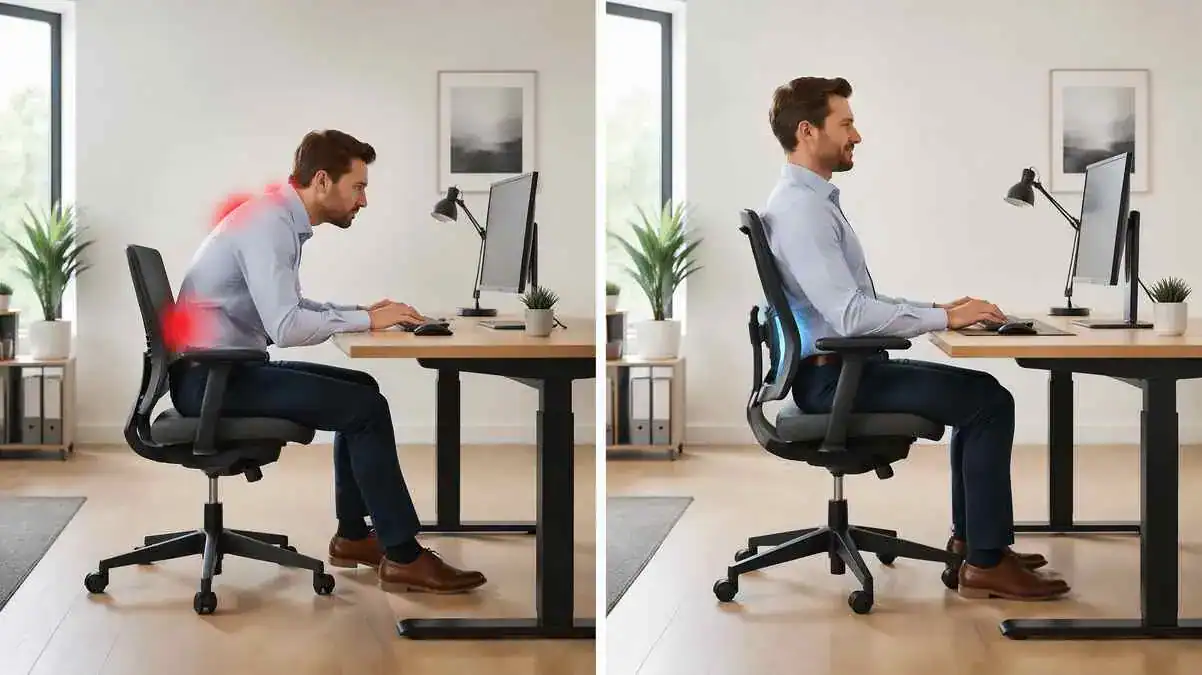
The best sitting position for back pain keeps the spine in a neutral position while allowing the body to stay relaxed and supported. The goal is not to sit perfectly all day. Instead, it is to maintain comfortable alignment and move regularly.
- Keep a neutral spine and maintain the natural curve of the lower back.
- Keep both feet flat on the floor or on a footrest if the floor feels too far away.
- Keep the knees near hip level or slightly lower, with the hips and knees at about 90 degrees or slightly more open.
- Use gentle lumbar support to support the lower back without pushing the body forward.
- Adjust chair height so the thighs stay supported and the shoulders remain relaxed.
- Change position often and avoid staying in one posture for hours.
- Small improvements in posture and sitting habits may help reduce discomfort over time.
- Back pain that has not improved after a week of home treatment needs professional advice. Changes in the bladder or bowels, loss of feeling around the genitals or anus, or pain, tingling, weakness or numbness in both legs need emergency medical care.
Regular movement is often more important than trying to hold one “perfect” posture. Standing up, shifting position, or taking short walking breaks may help reduce stiffness and make sitting feel more comfortable throughout the day.
Quick Answer
What Is the Best Sitting Position for Back Pain?
The best sitting position for back pain is supported and relaxed: sit fully back so the backrest supports the lower back’s natural curve, keep the feet flat on the floor or a footrest and the knees near hip level or slightly lower, and relax the shoulders with the head balanced above them. A slight recline with the back supported is also fine.
A neutral spine is the base of a proper sitting posture for back pain: it keeps the back’s natural shape instead of rounding forward or arching excessively. The lower back has a natural inward curve, or lumbar lordosis. Maintaining a neutral spine may help reduce discomfort and unnecessary stress on the muscles and structures that support the back.
A practical first step is to stand up and move about every 20 to 30 minutes, and to change position sooner if sitting becomes uncomfortable.
The 90-90-90 Rule for Comfortable Sitting
The 90-90-90 rule is a simple guideline for comfortable sitting. It means keeping the hips, knees, and ankles at about 90 degrees or slightly more open while sitting.
- Hips: Keep the knees near hip level or slightly lower, with the hips at about 90 degrees or slightly more open and the feet supported. The hips do not need to sit noticeably higher than the knees.
- Knees: Bend the knees to about 90 degrees or slightly more, and keep them comfortable.
- Ankles: Let the ankles rest naturally with the feet flat on the floor or supported.
This rule may help create a balanced sitting position and encourage proper alignment. It is also a useful way to check whether chair height feels appropriate.
However, the body does not need to stay at exact right angles all day. People have different body shapes, chair designs, and comfort preferences. Small adjustments and regular movement are often more important than trying to maintain perfect posture every minute.
A Quick Sitting Posture Checklist
A simple checklist may help create a more comfortable sitting posture:
- Sit fully back in the chair and use the backrest for support.
- Keep both feet flat on the floor or on a footrest.
- Keep the knees close to hip level.
- Relax the shoulders and avoid hunching.
- Keep the head aligned above the shoulders.
- Support the lower back and maintain its natural curve.
- Keep the monitor near eye level to avoid looking down for long periods.
- Change position regularly instead of staying still for hours.
- Stand up or walk briefly throughout the day when possible.
If readers want a complete walkthrough of each posture step, they can also learn how to sit properly in a chair to avoid back pain.
Small posture changes are often easier to maintain than dramatic corrections. Over time, these habits may help improve sitting comfort and make long periods of sitting feel more manageable.
Good sitting posture is only one part of the picture. Understanding why sitting causes back pain can help explain how prolonged sitting, poor posture, and reduced movement place stress on the spine.
Table of Contents
When to Worry
Mild Symptoms That Often Improve With Movement
Even with the best sitting position for back pain, some people notice temporary discomfort after sitting for a long time. This does not always mean something serious is wrong.
Common symptoms that often improve with movement include:
- Temporary lower back stiffness after sitting.
- Mild lower back soreness during desk work.
- Neck tightness after looking at a screen for long periods.
- Shoulder tension or muscle fatigue.
- Feeling stiff when standing up.
- Discomfort that gradually improves after walking or changing position.
These symptoms are often linked to prolonged sitting, muscle fatigue, or staying in one position for too long. Many people notice that the body feels stiff during the first few steps and then becomes more comfortable as movement increases.
It is important to distinguish temporary stiffness from persistent symptoms. Temporary discomfort usually improves with walking, gentle movement, or posture adjustments. Persistent symptoms tend to last longer, return frequently, or gradually become more noticeable over time.
Signs That Need Professional Medical Advice
A healthcare professional should evaluate back pain if symptoms do not improve or begin to interfere with everyday life. Get medical advice the same day if pain is severe and starts suddenly or gets worse quickly.
Professional medical advice is recommended if:
- Pain has not improved after a week of home treatment, according to Mayo Clinic.
- Pain spreads down one leg, especially below the knee.
- Pain causes weakness, numbness or tingling in a leg.
- Pain is constant or intense, especially at night or when lying down.
- Back pain comes with weight loss that cannot be explained.
- Symptoms keep returning.
- Pain affects work, sleep, or daily activities.
- Ergonomic changes and posture improvements do not help.
- Discomfort becomes more frequent or more intense.
Persistent symptoms do not always indicate a serious problem. However, an evaluation may help identify possible causes and provide guidance that fits the person’s situation.
Warning Signs That Need Emergency Care
Some symptoms should not be ignored. The NHS advises seeking emergency medical care if back pain comes with any of the following:
- Severe back pain after a fall, accident, or other injury.
- Changes in your bladder or bowels, such as difficulty peeing, or peeing or pooing yourself.
- Loss of feeling around the genitals or anus (the saddle area).
- Pain, tingling, weakness or numbness in both legs.
- Fever together with back pain.
- Severe abdominal pain together with back pain.
These warning signs do not automatically point to a specific condition. However, they need urgent evaluation by a qualified healthcare professional to find the cause and the most appropriate next steps.
Symptoms / Signs
Common Signs of Poor Sitting Posture
Poor sitting posture does not always cause immediate discomfort. In many cases, the body gives small warning signs before pain becomes more noticeable.
Common signs include:
- Slouching, where the lower back rounds instead of maintaining its natural curve.
- Sliding forward on the seat so the back loses the backrest’s support.
- Feet dangling instead of resting on the floor or a footrest.
- Leaning to one side or placing more weight on one hip.
- Frequent shifting or fidgeting to find a comfortable position.
- Using the hands to support the back while sitting for long periods.
These habits often develop gradually. Many people do not notice them until sitting starts to feel uncomfortable or tiring.
Lower Back Symptoms While Sitting
Lower back discomfort can feel different from person to person. Some people notice symptoms only after long desk sessions, while others experience back discomfort while driving. For longer trips, lumbar support while driving can be adjusted as part of the car-seat setup to improve lower-back contact and support a comfortable driving position.
Common lower back symptoms while sitting include:
- A dull ache in the lower back.
- Pressure or discomfort that increases while sitting.
- Mild soreness after desk work.
- Sharp discomfort when changing position or standing up.
- Lower back pain after working at a desk for several hours.
- Pain or stiffness after long drives.
Some people notice that discomfort improves after standing or walking for a few minutes. Others may find that symptoms return when they sit again.
Neck and Shoulder Symptoms
Poor sitting posture does not affect only the lower back. The neck, shoulders, and upper back may also become uncomfortable, especially during computer work.
Common symptoms include:
- Neck pain or neck stiffness.
- Shoulder tightness.
- Upper back tension.
- Headaches that develop after long sitting periods.
A common pattern looks like this:
Forward head posture
↓
Neck strain
↓
Muscle fatigue
↓
Shoulder tension
↓
Headaches
Neck and shoulder symptoms like these often develop when the head stays in front of the shoulders for long periods. Over time, the muscles of the neck and upper back work harder to support the head, which may lead to fatigue and tension.
Stiffness After Sitting for Long Periods
Many people feel stiff after sitting for too long, even when the discomfort is mild. Common signs include lower back stiffness, hip tightness, and feeling stiff during the first few steps after getting up. This temporary stiffness often improves with movement. However, symptoms that continue to worsen or do not improve deserve more attention.
Signs That Sitting Position May Need Adjustment
Sometimes the body signals that a sitting position is not working well.
Common clues include:
- Avoiding long sitting sessions because they feel uncomfortable.
- Using pillows, rolled towels, or cushions behind the lower back for extra support.
- Feeling more comfortable while standing or walking than while sitting.
These signs do not always mean there is a serious problem. However, they may suggest that posture habits, sitting behavior, or the sitting position itself needs closer attention.
Why Sitting Positions Can Affect Back Comfort
Slouching and Loss of the Natural Lumbar Curve
Slouching is one common reason people search for the best sitting position for back pain. When the body slouches, the lower back rounds and the natural lumbar curve becomes flatter.
Losing that curve can make the muscles work harder to support the body. How much load the lower back carries varies with support, back position, and the task, and it does not directly predict pain.
Slouching
↓
Lumbar curve lost
↓
Muscle tension
↓
Back discomfort
A neutral spine matters because it helps the lower back keep its natural curve instead of collapsing forward.
Understanding how poor posture can result in back pain makes it easier to see why maintaining a neutral spine is important. Learn how changes in spinal alignment increase stress on the muscles, joints, ligaments, and spinal discs over time.
Forward Head Posture and Rounded Shoulders
Forward head posture often develops when a person looks down at a laptop or uses a monitor positioned too low. The head moves forward, and the shoulders round toward the screen.
Holding the head forward can strain the neck and upper back. Over time, the muscles may feel tired, tight, or sore.
Rounded shoulders can also make proper posture harder to maintain. The body may lean forward more, which can add stress to the back during long desk sessions.
Sitting Too Long Without Movement
Even proper sitting posture can become uncomfortable when the body stays still for too long. Long sitting periods create a static posture, where the same muscles and joints remain in one position.
Sitting still for long periods can reduce blood flow in the legs, and pressure from the seat under the thighs can add to the problem. It may also leave the muscles and joints feeling stiff.
Movement is often more important than holding one position all day.
Leaning to One Side While Sitting
Leaning to one side can place more pressure on one hip and one side of the spine. This may create uneven spinal loading. For some people, this uneven pressure may also contribute to hip pain when sitting, especially when the same position is held for a long time.
Over time, this pattern may contribute to pelvic imbalance or one-sided discomfort. It may also become a habit, especially during desk work, phone use, or relaxed sitting.
A balanced sitting position helps the body distribute weight more evenly. It does not need to be rigid, but it should not repeatedly pull the body toward one side.
When discomfort is centered at the base of the spine, changes in seated pressure and pelvic position may also contribute to tailbone pain when sitting.
Poor Chair Support and Incorrect Chair Height
A chair can make sitting more difficult when it does not support the body properly. Common problems include a seat that is too high, a seat that is too deep, no lumbar support, dangling feet, or a very soft cushion.
When the feet do not reach the floor, the body may slide forward or slouch. When the lower back lacks support, the lumbar curve may flatten.
Correct chair height helps the feet rest flat and keeps the hips and knees in a more comfortable position.
Desk and Monitor Position Problems
A poor desk setup can also affect sitting posture. A monitor that sits too low may cause the neck to bend forward. A monitor positioned off-center may encourage twisting.
A keyboard or mouse placed too far away can make a person reach forward. This often pulls the shoulders and upper body away from the chair.
Poor setup
↓
Leaning forward
↓
Neck strain
↓
Muscle fatigue
↓
Back discomfort
A better setup keeps commonly used work items close and helps the body stay more relaxed while sitting.
When these problems continue throughout the workday, they may contribute to desk job back pain, including discomfort in the lower back, neck, shoulders, and upper back.
Weak Posture Muscles and Muscle Fatigue
Posture also depends on muscle support. Tired or weak trunk muscles can make sitting upright feel more difficult.
When these muscles become fatigued, the body may start to slouch, lean, or shift frequently. This does not mean a person is lazy. It often means the body needs better support, better movement habits, or both.
Reduced posture control can make long sitting sessions feel tiring. That is why sitting comfort depends on both posture and regular movement.
What It May Indicate
It May Be a Posture Habit Issue
Sometimes discomfort while sitting is less about the chair and more about everyday posture habits. Even the best sitting position for back pain can become uncomfortable if the body repeatedly falls into poor habits.
Common posture habits that may contribute to discomfort include:
- Slouching during desk work.
- Sitting in the same position for long periods.
- Reduced posture awareness throughout the day.
- Avoiding movement and staying seated for hours.
- Leaning forward without noticing.
Static sitting can be especially challenging. When the body stays in one position, muscles may become tired and stiff.
It May Be an Ergonomic Setup Problem
Sometimes the body is trying to adapt to a workspace that does not fit well.
Common ergonomic setup problems include:
- A chair that is too high or too low.
- A seat that feels too deep or does not support the lower back.
- Poor monitor height that encourages looking down.
- A desk setup that causes reaching or leaning forward.
- An unsupported lower back during long sitting sessions.
A person may have good posture habits and still feel uncomfortable if the workstation does not provide proper support. In these situations, the issue may be the environment rather than posture alone. For people working from home, better home office ergonomics can help address workspace problems caused by fixed furniture, limited adjustability, or equipment that does not fit the person well.
Temporary Stiffness vs Symptoms That Need Attention
Not all discomfort carries the same meaning. Temporary stiffness is common after long sitting periods, while persistent symptoms may require closer attention.
| Temporary Stiffness | Persistent Symptoms |
| Usually lasts minutes to a few hours | Lasts for days or weeks |
| Often mild to moderate | May become more intense over time |
| Usually improves with walking or movement | May not improve with movement |
| Often linked to prolonged sitting | May occur even without prolonged sitting |
| Typically does not affect daily activities significantly | May interfere with work, sleep, or normal activities |
| Usually occurs without numbness or tingling | May occur with numbness, tingling, or pain spreading into the legs |
Temporary stiffness is a common response to prolonged sitting. Persistent symptoms deserve more attention, especially when they continue despite posture changes and ergonomic improvements.
Chair Problems vs Posture Problems
Both poor chair design and poor posture can contribute to discomfort. However, they do not always create problems in the same way.
| Poor Chair | Poor Posture |
| Chair height is incorrect | Slouching or leaning forward |
| Lower back lacks support | Neutral spine is not maintained |
| Seat depth does not fit the body | Forward head posture develops |
| Feet do not rest comfortably on the floor | Rounded shoulders become common |
| Discomfort improves when using a better chair | Discomfort improves when posture habits change |
| Often related to equipment setup | Often related to sitting habits and body positioning |
In many cases, both factors work together. A poorly adjusted chair can encourage poor posture, while poor posture can make even a supportive chair feel uncomfortable. Understanding ergonomic chair fit can help clarify how chair design, support, and useful adjustability differ from posture habits themselves.
What to Do
Sit With a Neutral Spine
A neutral spine is one of the foundations of the best sitting position for back pain. Sitting up straight can be comfortable, but “straight” does not mean flattening the spine’s natural curves or holding the body rigidly. A neutral spine keeps those natural curves instead of rounding forward or arching too much.
It may help to sit balanced on the sit bones, as UCSF’s ergonomics guidance suggests, with the pelvis comfortably upright rather than rolled back onto the tailbone into a slouched position. There is no need to force a pelvic tilt.
A useful cue is a supported, relaxed position that keeps a comfortable curve in the lower back and lets the shoulders relax, rather than one held stiffly. There is no single correct posture that everyone must hold to prevent back pain, as a 2019 viewpoint in the Journal of Orthopaedic & Sports Physical Therapy points out.
Keep Feet Flat and Knees Around 90 Degrees
Foot placement plays an important role in sitting comfort.
Try to:
- Keep both feet flat on the floor.
- Keep the knees near hip level or slightly lower.
- Allow the legs to rest comfortably without excessive pressure.
- Use a footrest if the chair height prevents the feet from touching the floor.
Exact measurements are not required. The goal is to create a stable sitting position that feels comfortable and supported.
Sit Fully Back in the Chair
Many people sit near the front edge of the chair without realizing it. This habit reduces support from the backrest and often encourages slouching.
Instead, sit fully back in the chair so the backrest can support the body. This allows the lower back to receive proper support and may reduce strain during longer sitting sessions.
Using the chair’s backrest is often more comfortable than trying to hold the body upright without support.
When the back hurts, it may help to move toward the front of a stable chair, with the feet under the body, before standing up. Using the armrests to push up, or to lower the body when sitting down, may also help.
How to set up each part of the chair step by step is a related but separate topic covered in How to Sit Properly in a Chair to Avoid Back Pain.
Relax the Shoulders and Keep the Head Aligned
The head and shoulders affect posture throughout the entire spine.
Try to keep:
- The head positioned above the shoulders.
- The chin in a comfortable, neutral position.
- The shoulders relaxed rather than rounded or elevated.
Avoid jutting the chin forward toward the screen. Forward head posture can increase tension in the neck, shoulders, and upper back over time.
Change Position Regularly
Good posture is not a single position held all day. The body generally prefers movement.
Dynamic posture means allowing small adjustments throughout the day. Weight shifting, changing sitting positions, and occasional posture changes help reduce the effects of static sitting.
Avoid trying to stay perfectly still for hours. Regular movement often feels more comfortable than rigid posture.
Take Short Movement Breaks About Every 20 to 30 Minutes
A practical reminder, based on Cornell University’s ergonomics guidance, is to take a short posture break about every 20 to 30 minutes by standing up and moving. The timing is a guide, not a strict limit, and sitting longer in one position is not dangerous in itself. It also makes sense to change position sooner when the body feels uncomfortable or tired. A position that felt comfortable earlier in the day may need adjusting later.
Frequent breaks can be short:
- Standing for a few minutes.
- Walking around the room or office.
Short breaks like these may help reduce the stiffness that often builds during long sitting.
Why standing up after a long sitting session can feel stiff, and how often to move, is a related but separate topic covered in Back Pain From Sitting Too Long: Why It Happens, Warning Signs, and Relief Tips.
Build Better Sitting Habits Over Time
Long-term improvements in sitting comfort usually come from small, consistent changes rather than dramatic corrections. Good sitting habits are one small part of overall spinal health.
Helpful habits include:
- Paying attention to posture during desk work.
- Adjusting position before discomfort becomes noticeable.
- Moving regularly throughout the day.
- Using supportive sitting setups when possible.
Ergonomic & Support Options
Chair Height and Sitting Position
The best sitting position for back pain often starts with proper chair height. An office chair that fits the body well makes it easier to sit comfortably and maintain good posture. For a complete step-by-step guide to adjusting seat height, chair position, and overall chair fit, see the Desk Chair Height and Positioning guide.
Keep both feet flat on the floor or on a footrest, with the knees near hip level or slightly lower, as CCOHS recommends. A footrest can help if the feet do not reach the floor comfortably.
Some people prefer a slight recline. Sitting slightly reclined with the back fully supported may put less pressure on the lower-back discs than some unsupported upright positions, according to a 2023 review in PeerJ, though the studies it reviewed were small and older. However, research has not shown that one position or angle is best for everyone. OSHA’s workstation guidance includes both upright and slightly reclined supported sitting, so comfort and the task at hand can guide which one to use.
Everyday habits that make sitting harder, such as slouching or leaning forward for long periods, are a related but separate topic covered in Sitting Mistakes That Cause Back Pain: 10 Common Habits to Avoid.
How to Use Lumbar Support Correctly
Lumbar support helps maintain the natural curve of the lower back. Understanding what lumbar support is and how it works can help explain its role in supporting a more neutral seated position.
Place the support at the natural inward curve of the lower back. The guide to where lumbar support should be explains how to position and adjust it for comfortable lower-back contact. It should feel gentle and supportive rather than firm or aggressive.
If a support makes the back feel worse, see why lumbar support can hurt your back.
A built-in support, a lumbar roll or a small rolled towel can each support the lower back, and how these options compare is a related but separate topic covered in Types of Lumbar Support.
Monitor Height and Eye-Level Position
The screen should sit directly in front of the body, with the top at or slightly below eye level so the neck can stay relaxed. For detailed guidance, learn how to set the correct monitor height for comfortable viewing and a well-aligned workstation.
Keyboard and Mouse Placement
Keep the keyboard and mouse close enough that the arms can relax.
Best Sitting Position at a Desk
For many people, the best ergonomic sitting position for lower back pain combines good posture with a comfortable workstation setup.
A practical desk setup often includes:
- A monitor near eye level.
- A keyboard and mouse placed close to the body.
The goal is a setup that feels comfortable and encourages regular movement throughout the day. For a complete guide to arranging the chair, desk, monitor, keyboard, and other workstation components, see our guide to creating an ergonomic desk setup.
Sitting on a Sofa, Floor, or Dining Chair
Not every sitting surface provides the same support.
Sofas are often soft and may encourage slouching. Sitting upright with good back support and avoiding very low or sagging cushions may help improve comfort.
Dining chairs usually provide firmer support. Sitting fully back in the chair and keeping the feet flat often creates a more stable position.
Floor sitting can be comfortable for short periods, but some people find it difficult to maintain good posture. A cushion under the hips and a wall behind the back may make it easier, and the FAQ below covers floor sitting in more detail.
The same sitting position does not suit everyone. People differ in body size, natural spinal curves, how well a chair fits them, and which positions bring on their symptoms. General sitting guidance is a useful starting point, but it helps to adjust for comfortable support rather than copy someone else’s exact position.
FAQ
What Is the Best Sitting Position for Lower Back Pain?
The best sitting position for lower back pain keeps the lower back supported in its natural curve, with the feet flat and the knees near hip level or slightly lower. A slightly reclined, supported position may feel more comfortable for some people.
How to Sit Without Back Pain?
To sit without back pain, sit fully back in the chair with the back supported and the feet flat. Changing position and taking short movement breaks may help reduce stiffness during long sitting periods.
How to Sit With Lower Back Pain?
To sit comfortably with lower back pain, it often helps to use a chair that supports the back and to rest the feet on the floor or a footrest. A small rolled towel behind the lower back may also help if it feels comfortable. A relaxed position is usually easier on the back than forcing the body upright. If sitting starts to feel uncomfortable, changing position often helps more than trying to hold one fixed posture. Discomfort in one position does not prove that the position caused the back pain.
Is Sitting or Standing Better for Lower Back Pain?
Neither sitting nor standing is automatically better for everyone. Staying in one position for too long can become uncomfortable. Many people feel better when they alternate between sitting, standing, and moving throughout the day.
What Is the Healthiest Sitting Position?
There is no single healthiest sitting position for everyone. A supported, relaxed position that keeps the lower back’s natural curve, with the feet on the floor and regular changes of position, is a sensible starting point.
Is Sitting Cross Legged Bad for the Back?
Sitting cross-legged on the floor or a sofa for short periods is not necessarily harmful for everyone. However, staying in the same crossed-leg position for a long time may encourage uneven posture or place more pressure on one side of the body. Changing positions regularly is usually a better approach.
Is Sitting on the Floor Bad for the Back?
Sitting on the floor is not always bad for the back. To sit on the floor without back pain, it may help to sit on a cushion or folded blanket and rest the back against a wall or furniture. Another cushion behind the back may add comfort. Changing leg position often and getting up to move regularly may also help. No floor-sitting position has been shown to keep everyone pain-free, so comfort is a better guide than forcing a cross-legged or kneeling pose. If floor sitting still feels uncomfortable, a supported chair may be the easier choice.
Sources & References
- Mayo Clinic – Back Pain: When to See a Doctor
- Mayo Clinic – Abdominal Pain: When to See a Doctor
- NHS – Back Pain
- Occupational Safety and Health Administration (OSHA) – Computer Workstations eTool: Good Working Positions
- Canadian Centre for Occupational Health and Safety (CCOHS) – Working in a Sitting Position: Good Body Position
- Canadian Centre for Occupational Health and Safety (CCOHS) – Working in a Sitting Position: Overview
- Cornell University Ergonomics Web – Sitting and Standing at Work
- University of California, San Francisco (UCSF) – Sitting & Standing: Fatigue and Postural Variation
- University of California, Merced – Telecommuting Tips: Working on the Floor
- Wirral Community Health and Care NHS Foundation Trust – Back Pain (Lower)
- The Royal Wolverhampton NHS Trust – Back Pain
- Addenbrooke’s Hospital (Cambridge University Hospitals) – Seating and Ergonomics
- Slater D, et al. “Sit Up Straight”: Time to Re-evaluate. Journal of Orthopaedic & Sports Physical Therapy (JOSPT), 2019
- Roman-Liu D, Kamińska J, Tokarski T. Differences in Lumbar Spine Intradiscal Pressure Between Standing and Sitting Postures: A Comprehensive Literature Review. PeerJ, 2023
- Australian National University – Information Sheet: How to Set Up a Home Based Workstation
- Min SN, et al. Postural and Spinal Stability Analysis for Different Floor Sitting Styles. Heliyon, 2024
These references include medical guidance, ergonomic recommendations, workplace health advice, and posture research used to support the educational information presented in this article.
Update Note
Last Reviewed and Updated: November 8, 2026.
What changed: This update adds clearer guidance on sitting when the lower back already hurts, upright versus slightly reclined sitting, hip and knee position, floor sitting, and how often to change position. The warning signs now follow current NHS and Mayo Clinic guidance, including emergency signs and the one-week point to contact a healthcare professional. Sources were checked and updated, and repeated content was shortened. Key points now link to Mayo Clinic, the NHS, OSHA, CCOHS, Cornell University, UCSF and peer-reviewed research in JOSPT and PeerJ.
This article is intended for educational purposes only and does not replace professional medical advice, diagnosis, or treatment. Anyone experiencing persistent, worsening, or concerning symptoms should seek guidance from a qualified healthcare professional.